

Adding keywords to your Wix website tells search engines exactly what each page is about, so they can match it to the right searches. Without intentional keyword placement, even well-written pages can stay buried in results. Wix gives you several built-in tools to do this: the SEO panel, the Advanced SEO tab, and the Wix SEO Wiz. Since 2023, there has also been a direct Semrush integration for keyword research built into the dashboard. But knowing where to put your Wix SEO keywords matters just as much as knowing the steps to add them.
This guide walks you through how to find the right Wix SEO keywords, where to place them across your site, and the exact steps to add them through the Wix editor. If you serve international visitors, setting up your Wix site in multiple languages can further expand your reach.
For a complete guide to setting up those tags, see our step-by-step post on adding meta tags on Wix.
What Are Wix SEO Keywords and Why Do They Matter?
Wix SEO keywords are the words and phrases people type into Google to find sites like yours. Placing them in the right spots signals relevance to search engines, which directly affects where your pages rank. Without the right keywords in the right places, search engines may rank your Wix site lower than less well-written competitors.
Keywords matter because search engines like Google use them to understand your page's topic. When someone searches "how to add keywords to Wix website," Google scans page titles, headings, body text, and meta descriptions to find the most relevant match. The more clearly your page signals that topic, through strategic keyword placement, the better your chances of ranking for that search.
How Do I Find the Right Keywords for My Wix Website?
Before adding keywords, you need to know which ones to target. Start with free tools: Google Search Console shows you what queries already bring people to your site, while Google's autocomplete and "People also ask" reveal what your audience is actually searching for.
For a structured approach to keyword research on Wix:
- Google Search Console: Connect it to your Wix site (covered below) and check the Queries report to find terms you already rank for but could rank higher with better optimization.
- Google autocomplete: Type your main topic into Google and note the suggested completions. These are real searches your potential visitors make.
- Wix SEO Wiz: Wix's built-in tool asks about your business and suggests a starting keyword list, making it a practical first step if you're new to keyword research.
- Long-tail keywords: Phrases like "how to add keywords to Wix website" are more specific than just "Wix keywords" and have lower competition. They attract visitors who are closer to taking action.
Once you have a list of target keywords, the next step is knowing where to place them, which is covered in the best practices section below, before walking through the exact steps in the Wix editor.
How to Use the Wix-Semrush Integration for Keyword Research
Wix has a built-in Semrush integration that most site owners overlook. It gives you access to real keyword data, including search volume, difficulty scores, and related keyword suggestions, directly from your Wix dashboard without needing a paid Semrush account.
To access it, go to your site's dashboard and navigate to Marketing & SEO > Get Found on Google > Keyword Research. Enter your main topic or product, and Wix pulls Semrush data showing monthly search volume and how difficult it would be to rank for each term. You can add keywords directly from this panel to your site's SEO checklist.
This integration is particularly useful for finding long-tail Wix keywords with realistic competition levels. For a brand-new Wix site, targeting keywords with monthly volumes of 100–1,000 and medium difficulty is far more effective than chasing high-volume terms where you'll be competing with established authority sites.
Step-by-Step Guide to Add Keywords to Your Wix Site
The Wix editor gives you access to SEO settings for every page, where you can add a meta keyword tag via Advanced SEO. These steps walk you through the full process from login to saving your changes.
Step 1: Logging into Your Wix Account
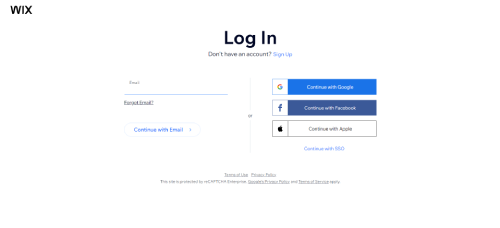
Start by accessing Wix and log into your account. You'll need to create an account if you're new to Wix. Sign up using your email address or connecting to a social media account. If you already have a Wix account, you can skip this step and proceed to the next.
Step 2: Access the Wix Editor
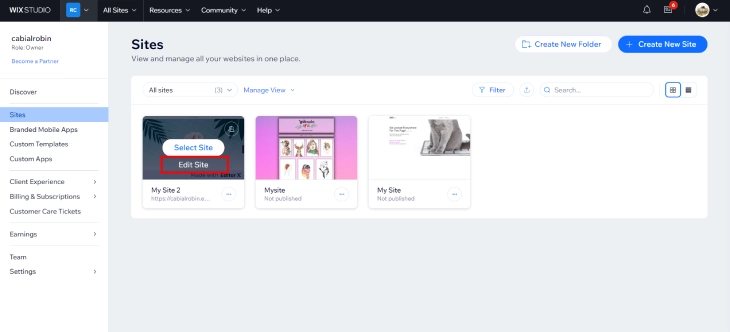
Once logged in, go to the site's dashboard and click "Go to All Sites." Click on the site you want to edit and select "Edit Site" to open the Wix Editor. This is where you can make changes to your site, including adding Wix keywords and search phrases.
Step 3: Click 'Pages'
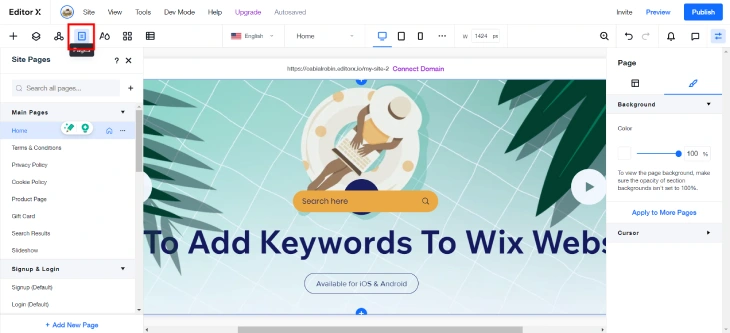
In the site editor, click on the "Pages" menu on the left-hand side of the screen. This will display a list of all the pages on your site. Select the page you want to optimize. Each page should target its own set of keywords based on its specific content.
Step 4: Click the 'More Actions' icon on the Relevant Page
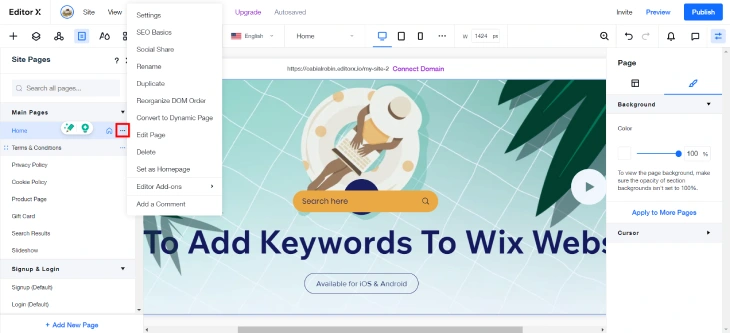
Select the page you want to add your keywords to and click on the "More Actions" icon (it looks like "...") next to the page's name. This opens a dropdown menu with additional options including SEO settings.
Step 5: Click SEO Basics
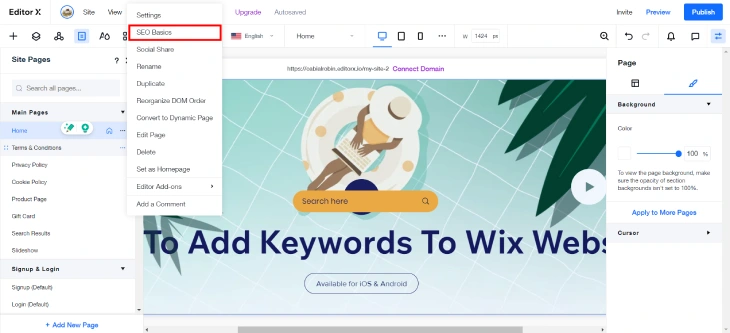
From the dropdown menu, select "SEO Basics." This takes you to the SEO settings panel for the selected page, where you can update your page title and meta description, two of the most important places to include your target Wix SEO keywords.
Step 6: Click the 'Advanced SEO' Tab
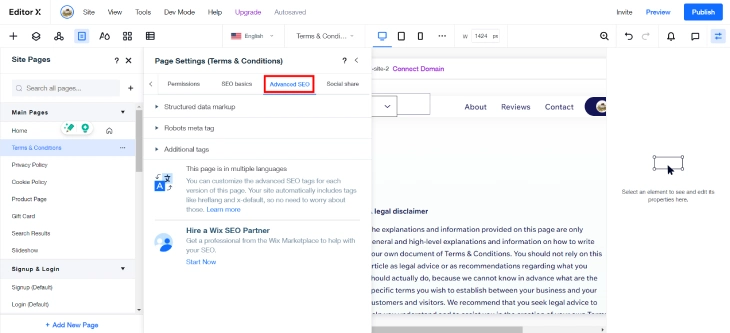
In the SEO settings, navigate to the "Advanced SEO" tab. Here you will find options for structured data markup, robots meta tags, and additional tags where you can add a keywords meta tag to your page. While Google largely ignores the meta keywords tag today, adding it is still a clean way to document your target terms.
Step 7: Click 'Add New Tag'
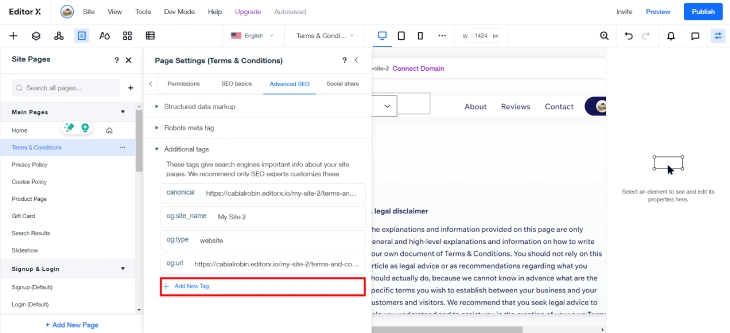
Click the "Additional Tags" section to expand it, then click "Add New Tag." This opens a text field where you can enter a meta tag in valid HTML format. Add one tag at a time.
Step 8: Add Your Keywords
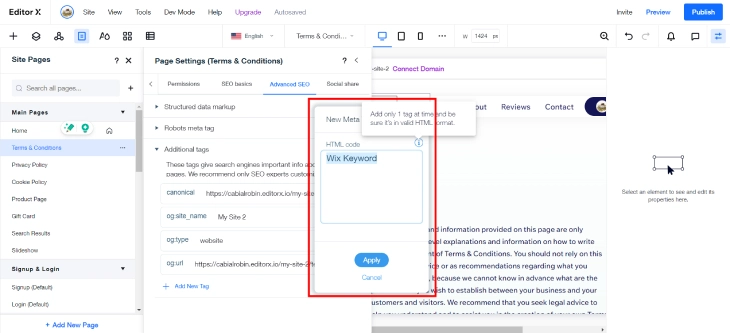
Enter your keyword meta tag in valid HTML format, for example: <meta name="keywords" content="wix seo keywords, add keywords to wix website">. Use relevant keywords that accurately describe the page's content. Click "Apply" once you're done. Remember: real SEO impact comes from placing keywords in your page title, headings, and body text, not just this meta tag.
How to Add Keywords to Wix Blog Posts
Blog posts on Wix use a different workflow than regular pages. When you open a blog post in the Wix Blog Manager (rather than the site editor), you access SEO settings through a dedicated panel on the right side of the post editor, not through Pages > More Actions.
To optimize a Wix blog post for keywords:
- Open your Wix dashboard and go to Blog.
- Click on the post you want to optimize, or create a new one.
- In the post editor, click the SEO & Social tab on the right panel (sometimes shown as a settings icon).
- Update the SEO title: include your primary keyword near the beginning. This is the title that appears in Google results, separate from your post's display title.
- Write a meta description that naturally includes your target keyword and gives searchers a reason to click.
- Edit the post URL (slug): Wix auto-generates a slug from your post title, but you can customize it. Keep it short and include your primary keyword.
- In the body of the post, include your primary keyword in the first 100 words and in at least one H2 heading.
One thing to be aware of: Wix blog posts share the same domain as your site pages, so the same keyword principles apply. Each blog post should target a distinct keyword that no other post or page on your site is targeting.
How Does Wix SEO Wiz Help With Keywords?
Wix SEO Wiz is a built-in guided tool that creates a personalized SEO plan for your site, including keyword recommendations. It walks you through the most important optimizations step by step, so you don't need to be an SEO expert to get started with Wix keywords.
To access Wix SEO Wiz, go to your site's dashboard and click on "Marketing & SEO," then select "Get Found on Google" or "SEO Wiz." The tool will ask you a few questions about your business and generate a keyword suggestion list alongside an SEO checklist. Each item in the checklist shows you exactly where to add your keywords, including page title, meta description, headings, and more. Completing the SEO Wiz checklist is one of the fastest ways to improve keyword placement across your entire Wix site.
For more control over your on-page SEO, also review your meta tags on Wix. The title tag and meta description are where your keywords have the most visible impact on search results.
Where Should I Place Keywords on a Wix Website?
Keywords have different levels of SEO impact depending on where they appear on your page. The most important placements are page titles and headings, as search engines weight these heavily when determining topic relevance.
Here are the key locations to include your Wix SEO keywords:
Page Title and Meta Description
Your page title (the SEO title shown in search results) is the single most important place for your primary keyword. Include it naturally at or near the beginning. Your meta description should also include the keyword. It doesn't directly affect rankings, but it influences click-through rates, which do. In Wix, update both through the SEO Basics panel accessed via Pages > More Actions.
Headings (H1, H2, H3)
Headings help search engines understand the structure and topic hierarchy of your page. Your H1 (page heading) should include your primary keyword. Subheadings (H2, H3) are good places for secondary keywords and related phrases. In the Wix editor, use the text formatting options to set heading levels when building your page content.
Body Text
Integrate your target keywords naturally throughout the page body, especially in the opening paragraph. Search engines read the first 100 words carefully to determine topic relevance. Aim for a natural density: mention your primary keyword a few times across the page without forcing it. Avoid keyword stuffing, as it can actively harm your rankings.
Image Alt Text
Every image on your Wix site has an alt text field. Alt text describes the image for screen readers and search engines, and it's an often-overlooked place to include relevant keywords. In the Wix editor, click any image and select "Settings" to add or edit the alt text. Use descriptive, keyword-rich alt text that accurately describes what the image shows.
Page URL (Slug)
Your page URL is another keyword placement that many Wix site owners skip. A URL like /how-to-add-keywords-to-wix-website is far stronger for SEO than /page-1. In Wix, you can edit the page URL via Pages > More Actions > SEO Basics. Keep URLs short, lowercase, and hyphen-separated, with your primary keyword included.
How Many Times Should I Use Keywords on a Wix Page?
There is no magic number, but a practical guideline is to mention your primary keyword 3–5 times on a standard-length page (600–1,500 words), and 6–10 times on a longer piece. What matters more than frequency is placement: once in the first 100 words, once in an H2, and naturally throughout the body text without awkward repetition.
The concept of keyword density, targeting a specific percentage of the total word count, is largely outdated. Modern search engines evaluate context, not counts. A page that uses your keyword naturally alongside related terms (what SEOs call "semantic keywords") tends to outperform a page that hits an arbitrary density target.
On Wix specifically, focus on:
- Primary keyword in the page title, H1, and meta description
- Primary keyword in the first paragraph
- Related phrases and synonyms throughout the body (Wix calls these "additional keywords" in the SEO Wiz)
- Secondary keywords in H2 headings where they fit naturally
If your keyword appears fewer than 3 times on a long page, Google may not pick up the signal clearly. If it appears more than 10–15 times in a 1,000-word piece, it starts to look unnatural, and Google treats that as a negative signal.
Wix SEO Patterns for Dynamic Pages
If you run a Wix online store or a blog with many posts, manually adding keywords to every single page is impractical. Wix handles this through SEO Patterns, templates that automatically apply keyword rules across all pages of the same type.
To access SEO Patterns, go to your dashboard > Marketing & SEO > Get Found on Google > SEO Patterns. Here you can set a title template for all product pages (for example: {Product Name} | {Store Name}) and a URL pattern that automatically includes the product name as the slug.
This is particularly important for e-commerce sites. Without SEO patterns, Wix may generate generic titles like "Product Page" for every item in your catalog. With patterns set correctly, every product page gets a keyword-optimized title and URL automatically, without any manual work per product.
How Do I Connect Google Search Console to My Wix Website?
Google Search Console shows you which Wix keywords are actually driving traffic to your site, what position your pages hold, and which queries have high impressions but low clicks. All of these are signals that help you refine your keyword strategy.
To connect Google Search Console to Wix, go to your site dashboard and navigate to Marketing & SEO > Get Found on Google. Wix provides a direct verification option that adds the required meta tag automatically, so you don't need to edit any code. Once connected, submit your sitemap (Wix generates one automatically at yourdomain.com/sitemap.xml) to help Google discover and index all your pages faster.
After a few weeks, check the Search Console "Performance" report. Filter by page to see which keywords each page ranks for. Use this data to update your page titles, headings, and content to better target the queries where you're already gaining traction. This is often the fastest way to move from position 40 to position 10 for a given Wix SEO keyword.
Best Practices for Wix Keywords and Search Phrases
Knowing how to add keywords to Wix is only part of the equation. Sustainable rankings come from using those keywords strategically across well-structured, genuinely useful content. The following best practices apply whether you're optimizing an existing page or building a new one.
Write High-Quality, Topic-Focused Content
Search engines prioritize content that fully answers a user's question. Rather than sprinkling keywords across thin content, build each page around a single topic and cover it thoroughly. A well-structured, informative page naturally incorporates your target keywords without forcing them. This approach also earns longer time-on-page from visitors, which is a positive ranking signal. If you're also building a blog, see our guide on how to create a blog with Wix to set up a content strategy that supports long-term keyword rankings.
Target Long-Tail Wix Keywords
Long-tail keywords are specific, multi-word phrases like "how to add keywords to Wix website" rather than just "Wix SEO." They have lower search volume but less competition and higher purchase or conversion intent. Targeting long-tail keywords is especially effective for newer Wix sites that haven't yet built the authority to rank for broad, competitive terms.
Use Unique Keywords for Each Page
Each page on your Wix site should target a distinct set of keywords. When two pages target the same keyword, they compete against each other in search results, a problem called keyword cannibalization. Map one primary keyword per page and use related secondary keywords to support it. Wix's Pages panel makes it easy to review each page's SEO title and ensure there's no overlap.
Optimize Anchor Text in Internal Links
When linking between pages on your Wix site, use descriptive anchor text that includes the target keyword of the linked page. For example, linking to a page about Wix site design with anchor text "how to design a Wix website" is more useful to search engines than "click here." Review your Wix site design to ensure your internal link structure supports keyword relevance across your site. For on-page navigation between sections, Wix anchor navigation lets you use keyword-rich anchor text within a single page, which adds another layer of topical signals for search engines.
Regularly Review and Update Your Keywords
Keyword trends shift over time. What people search for in your niche today may be phrased differently in six months. Connect Google Search Console to your Wix site and check your keyword performance monthly. Update page titles and content to reflect new query patterns, and add fresh content targeting keywords where you're gaining impressions but not yet ranking on page one.
Common Mistakes When Adding Keywords to a Wix Website
Even site owners who understand keyword basics make avoidable errors that limit their rankings. Here are five mistakes that frequently undercut Wix SEO efforts, along with what to do instead.
Targeting Keywords That Are Too Broad
Going after terms like "website builder" or "online store" puts you up against domain authorities with years of backlinks and content. A newer Wix site has almost no chance of ranking for these. Instead, focus on specific phrases tied to your niche, location, or use case. "Wix website for pet grooming in Austin" is far more winnable than "website builder" and attracts visitors who are ready to act.
Adding Keywords Only to the Meta Keywords Tag
Google has publicly stated it ignores the meta keywords tag when ranking pages. Adding your target phrase only there and nowhere else in your content does nothing for your rankings. Your keywords need to appear in the page title, at least one heading, and naturally throughout the body text. The meta keywords tag is a documentation tool, not a ranking signal.
Keyword Cannibalization Across Pages
When two pages on your Wix site target the same primary keyword, Google has to pick one to show in search results. Often it picks neither, because the competing signals cancel out. Audit your pages periodically to make sure each one targets a distinct phrase. If two pages overlap, consolidate them or differentiate the angles they cover.
Using Keywords in the URL but Not the Title or H1
A keyword-optimized URL slug is helpful, but it carries much less weight than the page title and H1 heading. Some site owners set a good URL and then write a generic title like "Home" or "Services." That wastes the opportunity. Your title and H1 are the strongest on-page signals you have. Make sure the primary keyword appears in both, not just the URL.
Ignoring Image Alt Text
Images on a Wix page are invisible to search engines unless you add descriptive alt text. Many site owners skip this entirely, leaving keyword placement opportunities on every page. For each image, write alt text that describes what the image shows and, where natural, includes a relevant keyword. This also improves accessibility for visitors using screen readers, which is an added benefit beyond SEO.
How Wix AI Tools Can Help With SEO Keywords
Wix has added several AI-powered features over the past couple of years that touch on SEO and content creation. Most guides don't cover these tools at all, or group them vaguely under "AI features." This section breaks down exactly what each tool does, how to access it, and where it falls short so you know when to use it and when to look elsewhere.
Wix AI Meta Description Generator
Wix includes an AI tool inside the SEO panel that can write a meta description for your page based on its existing content. To access it, open the SEO Basics panel for any page (Pages > More Actions > SEO Basics) and look for the "Generate with AI" option beneath the meta description field. Wix analyzes the page text and produces a suggested description, which you can accept, edit, or discard.
This tool is genuinely useful when you have dozens of pages that still need meta descriptions written. It saves time by giving you a draft to work from rather than starting from scratch. That said, the output tends to be generic. It will usually include your page title and a broad summary, but it rarely surfaces the specific keyword phrase you want to rank for. Always read the suggestion critically, manually insert your target Wix keyword if it's missing, and keep the description under 160 characters before saving.
One other limitation worth knowing: the AI generator works page by page. There is no batch option to generate meta descriptions for your entire site at once. For large sites, you will still need to go through each page individually.
Wix AI Blog Post Assistant
Wix's Blog Manager includes an AI writing assistant that can help you draft blog post content. You can access it when creating or editing a post: in the Blog Manager, open a post, and look for the AI writing option in the post editor toolbar (the icon varies by Wix version, but it is typically labeled "Write with AI" or shown as a sparkle icon). You give it a topic or a few bullet points, and it generates a draft with headings, an intro paragraph, and body sections.
For keyword purposes, the assistant is useful for generating keyword-rich heading ideas. If you type your target keyword as the topic, the draft it produces will usually work that phrase into several H2 headings and the opening paragraph, which gives you a usable starting structure. Treat it as a first draft only. The AI has no awareness of what your competitors are ranking for or what search intent looks like for a given query, so the content structure may not match what Google actually rewards for that keyword. Rewrite the sections that feel thin, add specific examples, and check that your primary keyword appears in the first 100 words.
The assistant also has a tendency to produce sentences that feel overly formal or generic. Read the output aloud before publishing, and rewrite any phrasing that sounds like a brochure rather than a person explaining something.
What Wix AI Cannot Do for Keywords
It is worth being direct about the gaps, because there is a lot of vague marketing language around "AI SEO tools" that can create false expectations. Wix's AI features, as of mid-2025, do not do the following:
- Keyword research: The AI tools have no access to search volume data, keyword difficulty scores, or trend data. For actual keyword research, you still need the Wix-Semrush integration or Google Search Console, both covered earlier in this guide.
- Competitor keyword analysis: Wix AI cannot tell you which keywords your competitors rank for or what gaps exist in your content coverage. That analysis requires a third-party tool like Semrush or Ahrefs.
- Ranking tracking: The AI tools produce content but have no view of how your pages are performing in search results. Tracking keyword positions over time still requires Google Search Console or a dedicated rank tracker.
- On-page SEO audits: The AI tools will not flag missing alt text, thin content, or duplicate titles. Use the Wix SEO Wiz checklist and Google Search Console's Coverage report for that.
In short, Wix AI tools are content drafting aids. They save writing time, but they do not replace a keyword research process or a data-driven SEO review. Think of them as a faster way to produce a starting draft, not as a substitute for the strategic work that determines which keywords to target in the first place.
How to Do a Wix Keyword Audit (Find Pages Already Ranking)
Most Wix site owners focus on new keyword targets, but your biggest quick wins are usually sitting on page two of Google right now. Pages ranking between positions 11 and 30 are already indexed and partially trusted by Google. A small content update is often enough to push them to page one.
Here is how to find these opportunities and act on them:
- Open Google Search Console and go to the Performance report. Make sure your Wix site is selected and the date range covers at least the last 90 days.
- Filter by position 11 to 30. Click "Average position" to add the position column, then sort by impressions descending. Pages with hundreds of impressions but a position above 10 are your targets.
- Click a URL in the table to filter to just that page. Switch to the Queries tab to see exactly which search terms are sending it impressions. The top query is your real keyword for that page.
- Update the page title and H1 in Wix to include the exact top query phrase, if it is not already there. This single change often produces a ranking lift within two to four weeks.
- Add a question-and-answer paragraph that directly addresses the top query. Write the question as a subheading (H3) and answer it in two to three sentences below. This matches how Google surfaces featured snippets and gives searchers an immediate reason to click.
Running this audit every 60 to 90 days is more effective than chasing brand-new keyword targets. You are building on traffic signals Google already has for your site, rather than starting from zero. Pages in positions 11 to 30 with strong impression counts are the closest thing to guaranteed wins in Wix keyword SEO.
Next Steps for Wix Keyword SEO
Adding keywords to your Wix website effectively combines two things: knowing the right Wix SEO keywords to target and placing them in the locations that matter most, including page titles, headings, body text, image alt text, URLs, and meta descriptions. The Wix editor gives you direct access to all of these through the SEO Basics panel and the Advanced SEO tab, while Wix SEO Wiz provides a guided checklist to make sure you haven't missed anything. For blog posts, use the Blog Manager's dedicated SEO panel, and for store pages, set up SEO Patterns to automate keyword-optimized titles across your entire catalog.
For ongoing improvement, connect Google Search Console to your Wix site to track which keywords are driving traffic and where you have the most room to grow. The combination of strategic keyword placement and data-informed updates is the most reliable path to moving your pages up in search results and bringing more organic visitors to your Wix site. If you run a local business, you can also embed Google reviews on your Wix site to display star ratings in search results and build trust with visitors. To understand which analytics tool gives you the best view of your keyword performance, see our comparison of Wix Analytics vs Google Analytics and what each tool actually measures.
* read the rest of the post and open up an offer