

You can't change your Wix template the way you used to. In 2021, Wix removed the option to swap templates on an existing site. If you're searching for a "change template" button in your dashboard, you won't find one. But there are still practical ways to give your Wix site a completely new look, and this guide covers all of them.
Below, you'll find three tested methods: starting a brand-new site with a different template, redesigning your current site using the Wix Editor, and using Wix's "Add Section" feature to pull in pre-designed layouts. Each approach has trade-offs, and the right choice depends on how much content you have and how different you want the final result to be.
Comparing the 3 Methods: Which Is Right for You?
| Method | Best for | Time required | Difficulty | Preserves SEO history |
|---|---|---|---|---|
| Start a new site (Method 1) | Little existing content, major structural change needed | Hours to days (content migration) | Medium | No (new site, need 301 redirects) |
| Redesign in the editor (Method 2) | Lots of content, active SEO rankings, connected apps | Hours (design changes only) | Low | Yes (same site, nothing changes) |
| Add Section (Method 3) | Specific page refreshes without a full rebuild | 30-60 min per page | Low | Yes (same site) |
Use this table as a starting point. Most users with established sites will prefer Method 2 or 3 to avoid rebuilding from scratch and risking their existing Google rankings. For more help deciding how to approach a site redesign, see our guide on how to edit a Wix website.
Content Migration Checklist Before Switching Templates
Most guides skip this step entirely and jump straight to the how-to. That's a mistake. Before you touch anything in your Wix dashboard, spend 30 minutes on this checklist. Recovering lost content after the fact takes much longer than saving it beforehand.
- Screenshot every page: Use a browser extension like GoFullPage (Chrome) or print each page to PDF. You'll want these as a visual reference when recreating layouts.
- Export your blog posts: Go to Settings, then Advanced, then Export Blog. If that option is available for your site, it downloads posts as a CSV or ZIP. If not, copy each post's text into a Google Doc before you start.
- Export contacts and CRM data: Go to Contacts in your Wix dashboard, click Import/Export, and download your contact list as a CSV. This includes email subscribers tied to your Wix account.
- Screenshot each connected app's settings: Open every app you use (Wix Stores, Bookings, Events, chat widgets, etc.) and take a screenshot of its configuration. These settings don't transfer automatically and can be tedious to rebuild from memory.
- Record your SEO settings page by page: Go to Settings, then SEO, then SEO Basics. Write down or copy the meta title and description for each page. On a new site, these fields will all be blank.
- Note your custom domain and DNS settings: Go to Settings, then Domains. Write down your connected domain, nameserver configuration, and any custom DNS records (MX records for email, TXT records for verification, etc.).
- Copy your Google Analytics and Search Console property IDs: You'll need to reconnect both after launching the new site. Having the exact property ID saves time and prevents accidentally creating duplicate properties.
- List all premium plan features you're actively using: Note whether you're using Wix Stores, Bookings, Events, or other paid add-ons. Some of these require re-enabling on a new site, and a few have per-site pricing you'll need to account for.
Doing this upfront means you won't be scrambling later trying to remember what your old homepage looked like or what your SEO title said.
Why Wix Removed Template Switching
Before 2021, Wix let you swap your entire template from the dashboard. The problem was that switching templates often broke custom layouts, deleted page-specific formatting, and scrambled content placement. Users would lose hours of work without realizing the damage until after the switch.
Wix moved to a section-based design system instead. Rather than locking you into a rigid template structure, the current editor lets you mix and match sections from any template. This gives you more control, but it also means you can't do a one-click template swap anymore.
Method 1: Start a New Site with a Different Template
This is the cleanest option if you want a totally different look and your current site doesn't have much content. You'll create a second site under the same Wix account, pick a new template, and then move your content over.
Step 1: Log Into Your Wix Account
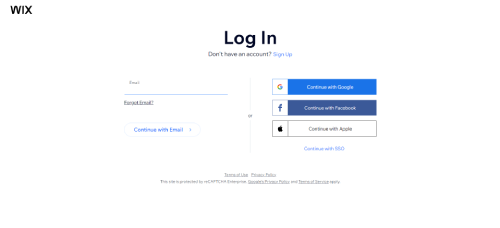
Go to Wix and sign in. You'll land on your dashboard, which shows all your existing sites.
Step 2: Back Up Your Current Site
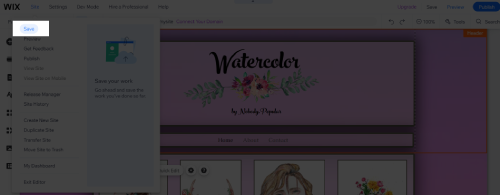
Before doing anything, save your current site. Open it in the Wix Editor, click "Site" in the top-left corner, and select "Save." This creates a restore point you can return to if needed.
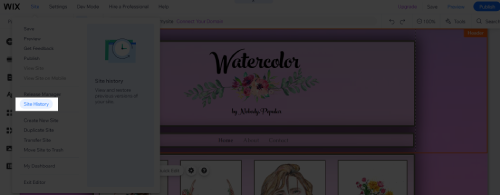
You can also click "Site History" to see all your previous saved versions and confirm the backup went through.
Step 3: Create a New Site and Pick a Template
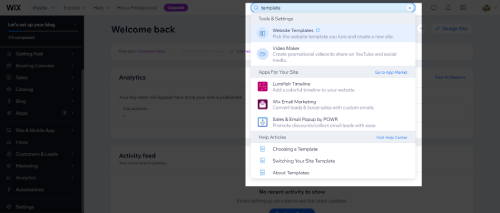
Go back to your Wix dashboard and click "Create New Site." Browse the template library using filters for your industry or site type. Preview each template to see how it handles text, images, and navigation. If you're not sure which template fits your needs, check out our roundup of the best Wix website templates for a curated list with pros and cons. If you run a consulting or coaching business, we also have a dedicated guide to the best Wix templates for consultants.
Step 4: Set Up the New Site
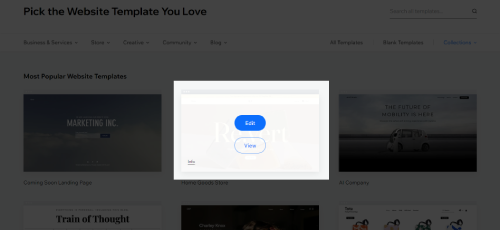
Click "Edit" on your chosen template. The Wix Editor will open with the template's default content. Before you start customizing, take note of the template's page structure, menu layout, and section types so you can plan where your existing content will go.
Step 5: Transfer Your Content
Copy your text, images, and media from the old site to the new one. Here's a practical approach:
- Open both sites in separate browser tabs
- Copy text content page by page (headings, body text, button labels)
- Download images from your old site and re-upload them to the new one
- Re-create any forms, galleries, or interactive elements using the new template's built-in apps
- Set up your navigation menu to match your old site's structure (or improve it)
If your old site has a blog, you'll need to manually recreate each post. Wix doesn't offer a built-in way to export and import blog content between sites. For sites with many blog posts, this method becomes time-consuming, so consider Method 2 or 3 instead.
Step 6: Connect Your Domain
Once your new site is ready, disconnect your custom domain from the old site and connect it to the new site. Go to your dashboard, select the new site, click "Settings," then "Domains," and follow the prompts. Keep your old site unpublished as a backup until you're confident the new one is working properly.
Step 7: Update Your SEO Settings
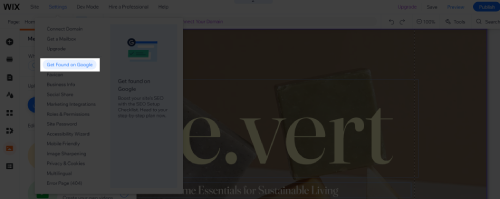
After switching to the new site, your SEO settings won't carry over automatically. Open the Wix Editor, go to "Settings," and select "Get Found on Google."
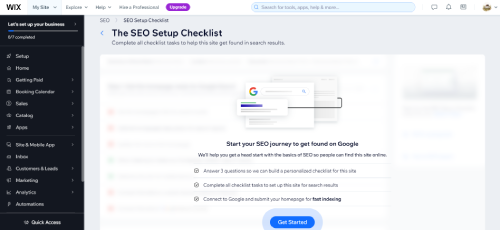
Work through the SEO Setup Checklist to update your site title, page descriptions, and keywords. If your old site had specific URLs that were ranking in Google, set up 301 redirects on Wix from the old URLs to the new ones so you don't lose that traffic.
What Carries Over When You Start a New Site (and What Doesn't)
The most stressful part of Method 1 is knowing what you'll lose. Here's a clear breakdown:
What DOES carry over:
- Your custom domain (after you reconnect it manually)
- Any videos or images you download and re-upload
- Apps you reinstall (Wix app subscriptions are per-site, so you may need to repurchase or reconnect)
- Your branding assets (logo, colors, fonts) once you re-enter them
- Your Google Analytics data (it's tied to your domain, not your site; reconnect the same GA property)
What does NOT carry over automatically:
- Blog posts: must be manually recreated
- Contact form submissions and CRM contacts: export from the old site first
- SEO meta titles and descriptions: must be re-entered on each page
- Google Search Console verification and sitemap: resubmit after connecting the domain
- Wix Stores products: must be re-added (no export/import between Wix sites)
- Bookings services and availability settings: must be reconfigured
- Email subscribers and marketing contacts: export your list before starting
- Premium plan features: your paid plan applies to the old site; the new site starts on free unless you transfer or purchase a new plan
Method 2: Redesign Your Current Site in the Editor
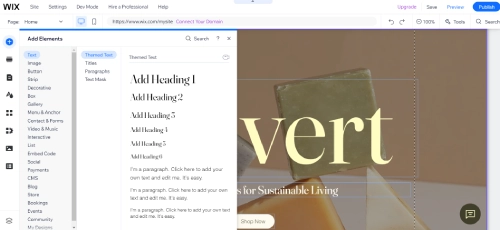
If you don't want to lose your existing content, domain connections, or SEO history, you can redesign your current site without switching templates. This works well when you want a visual refresh but not a structural overhaul.
Here's what you can change directly in the Wix Editor:
- Colors and fonts: Go to "Site Design" to update your color palette and typography across the entire site at once
- Page layouts: Rearrange, add, or remove sections on any page by dragging elements
- Header and footer: Redesign your site's header and footer for a fresh navigation style
- Background images and videos: Swap out section backgrounds to change the mood of each page
- Spacing and alignment: Adjust padding, margins, and element positioning for a cleaner look
- Multi-element moves: Group elements in Wix so that layout components like an image, heading, and button move together as a single unit when you reposition them
This approach keeps all your pages, blog posts, SEO settings, and connected apps intact. The downside is that you're limited to modifications within your current template's framework, so the result might not look as dramatically different as a full template change.
Method 3: Use "Add Section" for Pre-Designed Layouts
This is the middle ground between the first two methods. Wix's "Add Section" feature lets you insert pre-designed sections from other templates into your existing site. You get the fresh design elements without starting over.
To use it:
- Open your site in the Wix Editor
- Hover between two existing sections on your page until you see the blue "Add Section" button
- Click it to open the section library
- Browse categories like "Welcome," "About," "Services," "Contact," and more
- Preview sections and click to add them to your page
- Delete the old sections you're replacing
- Customize the text, images, and colors in the new sections to match your brand
You can rebuild an entire page this way, section by section, using designs from across the Wix template library. It's slower than a one-click template swap, but you keep your site's URL structure, blog content, and connected apps throughout the process.
The Wix AI Builder Alternative
If you're willing to start fresh but want guidance on what to build (rather than choosing a template manually), Wix's AI website builder is worth trying. Instead of picking a template from the library, you answer a series of questions about your business type, industry, and goals, and the AI generates a fully built site with appropriate pages, sections, and content placeholders.
This approach is useful if you've been unhappy with your current template but aren't sure which direction to go. The AI builder takes the guesswork out of template selection by creating something tailored to your business rather than a generic industry category. You can edit the result exactly like any other Wix site after it's generated. For a step-by-step walkthrough of the whole process, see our guide on how to design a website with Wix.
The trade-off: the AI builder creates a new site (same as Method 1), so you'll still need to migrate your content manually. But if you're starting relatively fresh, the AI-generated starting point is often better than a generic template because it already has the right page structure and section types for your business type.
How to Choose the Right Wix Template
If you're using Method 1, choosing the right template before you start building saves you hours of rework. Here's how to evaluate templates before committing:
- Filter by industry, not just aesthetics. Wix's template library is organized by category (restaurant, portfolio, health, e-commerce, etc.). Start with your industry category. Templates in your niche tend to have the right page structure and section types built in.
- Count the pages you need. Before previewing, list the pages your site requires (home, about, services, contact, blog, shop). Then check that the template includes those pages or has logical places to add them. Retrofitting a one-page portfolio template into a 10-page service site is painful.
- Preview on mobile. Wix templates are responsive, but they vary in how well they adapt to phones. Click the mobile view in the template preview and scroll through the key pages. A template that looks beautiful on desktop but cramped on mobile will frustrate most of your visitors.
- Check the navigation structure. The header and navigation menu are the hardest elements to dramatically change without starting over. Pick a template whose navigation style (top bar, side menu, hamburger, mega menu) matches what you need.
- Ignore the placeholder text and images. You'll replace all of them. Focus on the layout, spacing, section types, and overall visual weight of the template. These are the things that are harder to change after you've committed.
Which Method Should You Choose?
The best approach depends on your situation:
- Start a new site (Method 1) if your current site has little content, you want a completely different structure, or you're fine with manually moving content over
- Redesign in the editor (Method 2) if you have lots of existing content, active SEO rankings, or connected apps and domains you don't want to reconfigure
- Use Add Section (Method 3) if you want specific design elements from other templates without losing your existing setup
For a deeper walkthrough of the editor's design tools, see our full guide on how to design a website with Wix.
Common Misconceptions About Changing Wix Templates
- "You can switch templates from the dashboard": This hasn't been possible since 2021. Any guide showing a "Change Template" button is outdated.
- "Changing templates will keep all your content": Even before Wix removed the feature, switching templates often displaced or deleted custom content. With the current methods, you'll always need to manually adjust or transfer your content.
- "You need to pay for a new plan to start a new site": You can create multiple sites under one Wix account for free. However, premium plans (custom domain, extra storage) apply per site, so you may need to transfer or purchase a new plan for the new site.
- "Wix Studio templates work the same way": Wix Studio (formerly Editor X) is a separate product with its own template system. Templates built for Wix Studio aren't interchangeable with the standard Wix Editor.
Wix Studio: Does Template Changing Work Differently?
Wix Studio (previously Editor X) is a separate product from the classic Wix Editor, built for professional designers and agencies who need finer layout control. If you're on Wix Studio, here's what you need to know before trying to change your template.
Like the classic editor, Wix Studio does not support one-click template switching once a site is built. The same three methods apply: start a new site, redesign in the editor, or add pre-built sections. The interface looks different, but the logic is the same.
A few things are specific to Studio:
- Presets in Wix Studio: Studio has "Presets," which are pre-designed section layouts you can insert into any page. These work like the "Add Section" feature in the classic editor (Method 3), giving you a way to refresh individual pages without starting over.
- More control over breakpoints: Studio lets you customize layouts at specific screen widths rather than just toggling between desktop and mobile. This gives you more options when redesigning without switching templates, but it also makes changes more complex.
- Studio and classic Wix are not interchangeable: If you want to move from Wix Studio to a classic Wix template (or the other way around), you'd need to start a new site entirely. The two editors use different underlying structures, so there's no direct migration path between them.
- If an agency built your site on Studio: Consult them before making major design changes. Studio sites are often built with custom CSS, responsive rules, and layout logic that may not be obvious from the editor alone.
If you're not sure whether you're on Wix Studio or the classic editor, check your dashboard. Sites built on Studio are labeled as such, and the editor interface looks noticeably different (grid-based, with a different top toolbar).
Tips for a Smooth Transition
- Screenshot every page of your old site before making changes, so you have a visual reference for what needs to be recreated
- Export your blog posts to a text document or spreadsheet before starting, since there's no automatic migration tool
- Check mobile responsiveness on the new design. Templates can look great on desktop but break on phones
- Test all forms and buttons after the switch. Interactive elements often need to be reconnected
- Update any external links pointing to your old site's pages if the URL structure changed
- Keep your old site accessible (unpublished) for at least 30 days in case you need to reference or recover content
* read the rest of the post and open up an offer