

Website building involves several key steps, and creating a new page is fundamental for expanding your site's content and functionality. Whether you're a blogger, business owner, or creative professional, adding new pages showcases different aspects of your work, products, or services. Wix provides a user-friendly platform for website creation, but not everyone is familiar with adding and customizing new pages from the start.
If you already have a page with a layout you like, it's often faster to duplicate an existing page and modify it rather than starting from scratch. The duplicate keeps all your sections, images, and design intact.
This guide helps you create new pages on your Wix website and provides valuable tips and best practices for customizing the design and layout to ensure your new page aligns with your brand and delivers an exceptional user experience. From selecting the right layout to incorporating branding elements and optimizing for search engines, this guide helps you create a new page that enhances your website's overall appeal and functionality.
Step-by-Step Guide to Creating a New Page on Wix
Creating new pages is fundamental in building and managing a Wix website. Whether you're adding an "About" section, a product showcase, or a contact form, the process is simple and can be accomplished in just a few simple steps.
Here's how you can get started:
Step 1: Click 'Pages'
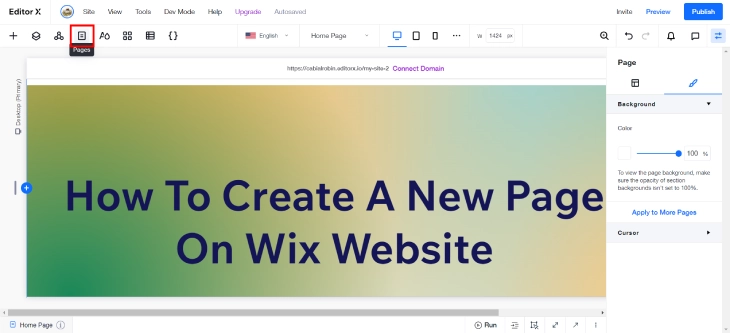
In your Wix Editor, in the menu section, select 'Pages', the sheet of paper icon. This is where you'll find all the existing pages on your website, and the option to add new ones.
Step 2: Click '+' to Add New Page

A dropdown menu will appear once you've clicked the icon. Beside the search bar, select '+' to add a new page to your Wix site.
Step 3: Select Your Preferred Page Type

Wix offers 4 varieties of pre-designed page templates and layouts, catering to different types of content and website needs. There's 'Page', a standard blank page; Dynamic Page which you can design once and generate unlimited pages; 'Router' which redirects visitors and passes data to pages using code; and 'Custom Member Page' which is accessible to site members only. Take a moment to browse through the options and select the page type that best suits your requirements
Step 4: Name Your Page

After selecting the page type, you will be prompted to name your new page. Choose a name that reflects the content or purpose of the page. This helps you stay organized and aids in SEO, making it easier for visitors to find the content they are looking for on your site.
Customizing Your New Wix Page
Once you've created a new page on your Wix website, the real fun begins. Customizing it to match your brand, showcase your content, and provide an exceptional user experience. Wix offers a wealth of design tools and features to help you transform your new page into a visually stunning and highly functional addition to your website.
Here are some tips to help you make the most of your page customization options:
Choosing the Perfect Page Layout
Wix provides many page layout options, from grid-based designs to multi-column sections and beyond. Take the time to carefully consider the layout that will best accommodate your content and enhance its presentation. Think about the flow of information, the emphasis you want to place on different elements, and how the layout will translate across desktop and mobile devices.
Branding Your Wix Page
Consistency is key when it comes to branding across your Wix website. Ensure your new page aligns with your brand identity by incorporating your unique color scheme, typography, imagery, and design motifs. This will help reinforce your brand's visual identity and create a cohesive, professional-looking experience for your visitors.
Advanced Design Elements
Wix's powerful design tools allow you to take your page customization to the next level. Experiment with interactive features like animations, parallax scrolling, and multimedia content to add visual interest and engagement. These advanced design elements can help your new page stand out and create a memorable user experience that engages visitors.
Optimizing Page Structure and Navigation
The structure and navigation of your new Wix page are crucial for guiding users through your content and ensuring a smooth, intuitive experience. Carefully plan the placement of key information, calls-to-action, and internal links to help visitors find what they're looking for quickly and effortlessly. A well-organized page structure will improve user engagement and, ultimately, better overall performance.
How to Add a Page to Wix and Make It Appear in Navigation
One thing many first-time Wix users don't realize: when you add a new page in Wix, it does not automatically appear in your site's navigation menu. You have to turn that on manually.
In the Wix Editor, open the Pages panel. Find your new page in the list, then look for the menu icon (three dots) next to the page name. Click it and look for "Add to Menu." Once enabled, the page will show up in your site's main navigation bar. You can also drag pages up or down in the Pages panel to change the order they appear in the menu.
There are cases where you specifically do not want a page in the main navigation. A common example is a Thank You page that visitors land on after submitting a form. You don't want that page discoverable through the menu, but you still need it to exist. In that case, leave "Add to Menu" off and link to the page directly from a button, or set it as the redirect destination in your form settings.
Getting this right is part of knowing how to add a page on Wix properly: creating the page is only the first step. Controlling where it sits in your site structure determines whether visitors can actually find it.
Setting the Right URL for Your New Wix Page
Every new page you create in Wix gets an auto-generated URL slug based on the page name you choose. If you name the page "Contact Us," Wix will set the slug to something like /contact-us. That's usually fine, but it's worth checking and editing before the page goes live.
To edit the slug, go to Pages, click the three-dot menu next to your page, and select SEO Basics. From there you can set a custom slug. Keep it short, lowercase, and hyphenated. For example, /services is better than /services-page-1 or /our_services. Underscores are not recommended for SEO purposes since Google treats hyphens as word separators but may not treat underscores the same way.
The URL slug matters for search visibility. A descriptive slug like /about or /pricing signals clearly to search engines what the page covers. A slug like /blank-3 tells them nothing. This same SEO Basics panel is also where you set the page's meta title and meta description, both of which appear in Google search results. Fill these in before publishing any new page.
Adding a New Page vs Duplicating an Existing Page
When you need a new page on your Wix site, you have two options: create a blank page from scratch or duplicate an existing one. Knowing which to use saves time and keeps your design consistent.
Creating a new blank page makes sense when the content you're adding is completely different in structure from anything else on your site. A booking page, a team directory, or a dedicated FAQ page often needs a unique layout that doesn't match your existing pages. Starting fresh gives you full control without having to strip out sections that don't apply.
Duplicating an existing page is the better choice when the new page should look similar to one you've already built. If you've designed a Services page for one offering and want to create a second page for a different service, duplicating saves you from rebuilding all the sections, image blocks, and formatting from scratch. The duplicate is entirely independent once copied, so editing one won't affect the other.
A good rule of thumb: if you'd spend more time deleting and replacing content than you would building from scratch, start fresh. If the new page is roughly 70% the same as an existing one in terms of structure, duplicate it instead.
Conclusion: How To Create A New Page On Wix Website
Creating new pages is a fundamental aspect of building and managing a Wix website. You can also hide pages on Wix when they're not ready for visitors, or duplicate pages on Wix to quickly build out new sections based on existing layouts. If you need to remove a page later, see our guide on how to delete a page on Wix. Whether you're expanding your content, introducing a new product or service, or reorganizing your website's structure, creating new pages quickly and easily will be essential for keeping your website fresh, engaging, and aligned with your business goals.
If your new page has a single campaign goal rather than general site content, consider building it as a Wix landing page instead. The setup process is slightly different and optimized for conversions rather than general browsing.
If you want to organize multiple new pages under a parent section, setting up a dropdown menu on Wix is the cleanest way to keep your navigation structured and easy to use. Once your page is live, you can extend it with third-party tools, maps, and custom scripts. See our step-by-step guide on how to add HTML code on Wix for all three methods, including the Embed Widget, site-wide code injection, and Wix Velo.
With Wix's easy drag-and-drop editor and professional templates, adding new pages is simple. Features like animation effects and interactive elements enhance your page's look. Regularly updating your site engages visitors and boosts SEO, improving visibility and attracting more traffic. Mastering Wix's page creation can help you achieve your online business goals effortlessly.* read the rest of the post and open up an offer