

Which Is Better for SEO: Wix or WordPress?
Search Engine Optimization (SEO) is an essential strategy for enhancing a website's visibility and achieving higher rankings in search engine results. Effective SEO makes a site more accessible to its intended audience, which can lead to increased traffic and engagement. Wix offers an accessible, user-friendly SEO approach with tools like SEO Wiz, designed to guide users through the optimization process. On the other hand, WordPress allows for advanced customization with its array of plugins and themes, ideal for users with technical skills who desire more control over their SEO settings. Both Wix and WordPress provide strong SEO features that cater to different levels of user expertise and customization needs. One of the most actionable starting points for Wix SEO is knowing how to add keywords to your Wix website across all the right locations, from page titles to image alt text.
This post compares the SEO features provided by Wix and WordPress in detail, highlighting how each platform can enhance a website's performance in search engine rankings. By breaking down these elements, users can choose which platform better suits their SEO needs.
Wix Vs. WordPress: SEO Comparative Overview
Wix offers user-friendly tools like the SEO Wiz, designed to help beginners optimize their sites with ease. WordPress, known for its flexibility and advanced features, allows for deeper customization and potentially superior SEO performance when optimally configured.
Here's a comparative overview of the SEO capabilities of the two platforms:
|
Price |
Ease of Use |
Customization |
Performance |
|
|
Wix |
$4.50 per month |
|
|
|
|
WordPress |
$8.87 per month |
|
|
|
Ease of Use
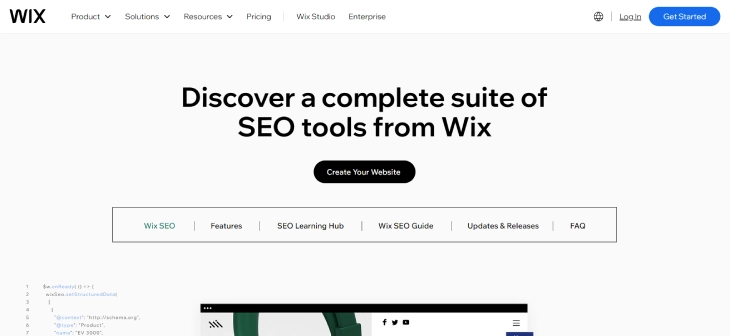
Wix provides a user-friendly interface with drag-and-drop features, simplifying site optimization for beginners. The SEO Wiz tool helps users through the optimization process, easily adding meta tags, customizing URLs, and inserting alt text into images.
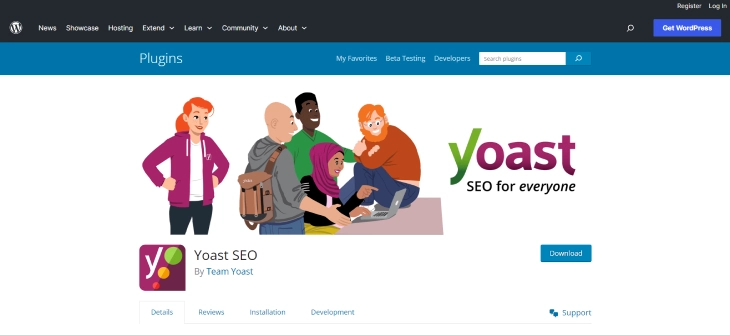
WordPress demands more technical knowledge for full optimization but offers plugins like Yoast SEO, which equip beginners with comprehensive tools to enhance their sites easily.
Customization
Wix offers a good level of customization, but it's not as extensive as WordPress. Users can add meta tags, customize URLs, and add alt text to images, but they can't access or edit the site's HTML or CSS. This can limit advanced SEO customization.
WordPress offers a high level of customization, allowing users to access and edit the site's HTML and CSS. Plugins can also add more SEO features to the site, providing even more customization options.
Performance
Wix has significantly enhanced site performance recently, introducing features such as lazy loading and image optimization to boost site speed. Despite these improvements, Wix still trails behind WordPress in performance.
With optimal hosting and proper optimization, WordPress sites can achieve exceptionally fast loading times, giving WordPress a distinct advantage in SEO, where site speed is a key determinant of search engine rankings. Although Wix sites can achieve good rankings, WordPress sites tend to excel in site speed and overall performance.
Wix Vs. WordPress: SEO Pros and Cons Overview
Understanding the SEO pros and cons of each platform is crucial for website builders. Wix simplifies SEO with user-friendly tools, making it accessible for beginners, while WordPress offers extensive customization options that can enhance SEO performance for those with more technical expertise.
Here's an overview of the advantages and disadvantages of both platforms, helping you decide which fits your search engine optimization needs best.
|
Wix SEO |
WordPress SEO |
|
|
Pros |
|
|
|
Cons |
|
|
Core Web Vitals: How Wix and WordPress Compare in 2025
Core Web Vitals are Google's key performance metrics for user experience, measuring how fast a page loads (Largest Contentful Paint), how visually stable it is (Cumulative Layout Shift), and how quickly it responds to interaction (Interaction to Next Paint). These scores directly influence rankings.
Wix Core Web Vitals Performance
Wix has invested heavily in Core Web Vitals since 2021. Pages built on Wix now benefit from automatic lazy loading for images, optimized font loading, and a CDN that distributes content globally. Most Wix pages built with modern templates pass Core Web Vitals on mobile without any manual optimization. The platform handles image compression, script loading order, and caching automatically, which removes a significant source of WordPress performance problems for non-technical users.
The main limitation: Wix apps installed from the App Market can add third-party scripts that hurt load times. Installing too many apps is the most common reason a Wix site fails Core Web Vitals.
WordPress Core Web Vitals Performance
WordPress does not optimize Core Web Vitals out of the box. A freshly installed WordPress site with a basic theme will typically fail Core Web Vitals on mobile without additional work. However, with the right hosting (LiteSpeed servers or Cloudflare), a performance plugin (WP Rocket, FlyingPress, or Perfmatters), and an image optimization plugin (ShortPixel or Imagify), a WordPress site can score 90+ on Core Web Vitals consistently.
The ceiling is higher on WordPress, but the floor is also lower. A misconfigured WordPress installation with too many plugins can load noticeably slower than a default Wix site. WordPress gives you more control over performance, but that control requires technical knowledge to use effectively.
Structured Data and Schema Markup Support
Schema markup is code that helps Google understand your content type (article, product, recipe, local business, etc.). Pages with proper schema can earn rich results in search, including star ratings, FAQs, and breadcrumbs in the SERP. This is a significant ranking advantage for competitive keywords.
Schema on Wix
Wix automatically generates structured data for several content types: blog posts, products, events, restaurants, and local business information. For most Wix sites, the automatic schema is sufficient and requires no manual setup. Wix also lets you add custom JSON-LD schema through the Advanced SEO tab, so you can add FAQ schema, How-To schema, or any other schema type manually if the automatic output does not cover your needs.
The limitation is precision: Wix's auto-generated schema is correct but not always comprehensive. For highly specific schema types (medical organizations, legal services, book reviews), manual JSON-LD via the Advanced SEO tab is required, which means understanding how to write schema code.
Schema on WordPress
WordPress has a richer schema ecosystem. Plugins like RankMath and Yoast SEO Premium provide extensive schema support with a visual interface: you select the content type and fill in fields, and the plugin generates the JSON-LD automatically. RankMath's free version supports FAQ schema, How-To schema, product schema, local business schema, and more without touching code. For websites that depend heavily on rich results (recipe sites, review sites, local businesses), WordPress has a clearer advantage in this area.
SEO Verdict: Which Platform Should You Actually Use?
The answer depends on your situation, not an abstract comparison. Here is a practical breakdown:
Choose Wix If:
- You are building a small business site, portfolio, blog, or landing page and do not have a developer available
- You need to launch quickly without managing hosting, security updates, or plugin compatibility
- Your primary SEO needs are on-page optimization (meta tags, headings, alt text, GSC connection) rather than advanced technical SEO
- You do not need to rank for highly competitive, high-volume keywords where every technical advantage matters
Choose WordPress If:
- You are building a site that depends heavily on content volume (100+ posts), advanced schema, or specific technical SEO configurations
- You have access to a developer or are comfortable with technical configurations
- Your site needs to handle large-scale eCommerce with complex product schema, category pages, and filtered navigation
- You want to run full SEO audits, custom redirect rules, canonical tag overrides, or hreflang files at scale
For most people searching "which is better for SEO, Wix or WordPress," the honest answer is that Wix is good enough. The SEO gap between Wix and a properly configured WordPress site has narrowed significantly since 2021. Unless you are building a site that competes for high-volume terms in a very competitive niche, the platform choice matters less than the quality of your content, the strength of your internal linking, and the number of pages you publish.
Conclusion: Wix Vs. WordPress: Which Is Better For SEO, Wix or WordPress?
Choosing between Wix and WordPress for SEO depends on your specific needs and technical skills. Wix is ideal for beginners who prefer a straightforward, guided approach to SEO, while WordPress caters to users seeking more control and customization through its extensive plugins and themes.
Both platforms can effectively enhance search engine visibility; the decision should be based on your preference for ease of use versus detailed control. Evaluating your SEO goals and capabilities will guide you in selecting the best platform to support your website's success.
* read the rest of the post and open up an offer