

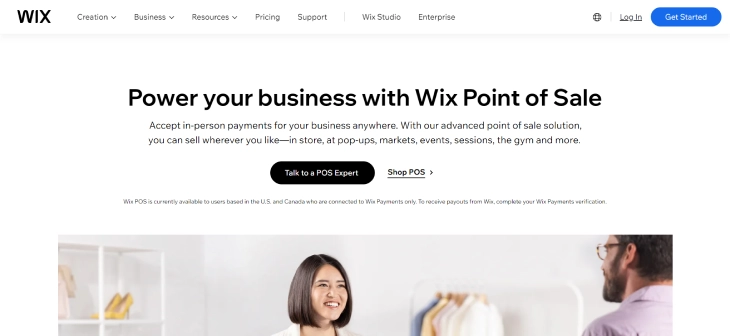
The Wix POS system is a good fit for small businesses that already run a Wix website and want to sell in person without juggling a separate platform. It scores well on ease of use and affordability, but falls short on offline mode and advanced customization. Our verdict: if your Wix eCommerce store is your home base and your in-store needs are straightforward, Wix POS is worth the investment. If you need a standalone point of sale with no website requirement, Square is the better pick.
In this evaluation and review of the Wix POS system, we break down the features, hardware requirements, pricing, and head-to-head comparisons with Square, Shopify POS, Lightspeed, and Toast. We also cover setup steps and common mistakes so you can decide whether the Wix point of sale is right for your retail or restaurant business.
Wix POS System: Pros and Cons Overview
Before looking deeper into this Wix POS system review, here is a quick summary of the main advantages and disadvantages. This should give you an immediate sense of whether the Wix POS system fits your retail or restaurant business.
|
Pros |
Cons |
|
|
Wix POS System: Detailed Scorecard
To evaluate the Wix POS system fairly, here is how it scores across the criteria that matter most to small business owners.
| Criteria | Score (out of 5) | Notes |
|---|---|---|
| Ease of Setup | 5/5 | If you already have a Wix website, POS activation takes under 10 minutes. |
| Inventory Management | 3.5/5 | Solid for single-location retail with under 1,000 SKUs. Struggles with variants at scale. |
| Offline Mode | 2.5/5 | Basic offline functionality exists but sync reliability varies. Not suitable for high-volume environments where internet drops are common. |
| Hardware Compatibility | 3/5 | Works with its own card reader and a limited range of certified peripherals. Cannot use most third-party POS hardware. |
| Reporting and Analytics | 3.5/5 | Sales reports, top-selling product views, and staff reports are available. Missing advanced forecasting or multi-location dashboards. |
| Customer Support | 3.5/5 | Email and phone support available. Response times vary; complex POS hardware issues sometimes require multiple contacts. |
| Value for Money | 4.5/5 | POS is included with Wix Core, Business, and Business Elite plans at no extra monthly fee. Most competitors charge $29-$99/month separately for POS software. |
| Overall | 3.6/5 | Strong for Wix-first small retailers; limited for high-volume or multi-location businesses. |
Key Features of the Wix POS System
The Wix POS system offers a range of features designed to help businesses manage their retail and restaurant operations more efficiently. Below is a breakdown of the core Wix retail POS system features you should know about before making a decision.
Sales Management
One of the standout Wix POS features is its sales management capabilities. The system supports multiple payment options (credit cards, debit cards, cash, and contactless payments), customizable receipts, and automated tax calculations. You can process transactions quickly and keep a clear record of every sale.
These tools make it straightforward to track sales data and analyze performance over time. If you are running a Wix retail POS setup, you can view daily, weekly, and monthly sales reports directly from your Wix dashboard. For more on how Wix handles transaction costs, see our guide on understanding Wix payment fees.
Inventory Management
The Wix POS system offers inventory management tools that sync across your online store and physical location. You can track stock levels in real time, set up low-stock alerts to avoid running out of popular items, and create purchase orders when it is time to restock.
This is particularly useful for businesses selling both online and in person. When a product sells at your physical register, the inventory count updates on your Wix website automatically. This prevents overselling and reduces the manual work of maintaining two separate inventory systems. If you want a full picture of how Wix handles online selling, our Wix eCommerce review covers the broader platform in detail.
For retail businesses specifically, Wix's inventory tools handle the basics well: variant tracking (size, color), low-stock alerts, and real-time sync between your online and in-store catalog. Where it hits limits is at scale: stores with 500+ SKUs and complex variant trees will find Wix's inventory less capable than dedicated retail platforms like Lightspeed.
Customer Engagement
The Wix POS system includes tools for building customer relationships beyond the point of sale. You can create detailed customer profiles that track purchase history, set up loyalty programs to reward repeat buyers, and send automated email campaigns based on shopping behavior. For a closer look at the rewards side, see our Wix loyalty program review.
These customer engagement features help you turn one-time buyers into returning customers, which is a critical factor for both Wix retail POS and Wix restaurant POS businesses looking to grow revenue over time.
Reporting and Analytics
Wix POS gives you access to sales reports broken down by product, time period, staff member, and payment method. You can see which items sell best at your physical location versus online, spot trends by day of the week, and track average transaction values. These reports live inside the same Wix dashboard you use for your website, so there is no need to log into a separate analytics tool.
One limitation worth noting: the reporting is solid for basic analysis, but it does not match the depth you get from dedicated retail analytics platforms like Lightspeed. If you need granular margin reports or vendor performance tracking, you may need to export data and work with it in a spreadsheet.
How to Set Up Wix POS
Getting started with the Wix POS system takes roughly 15 to 30 minutes if you already have a Wix eCommerce site. Here is the process step by step:
- Upgrade to a Core plan or higher: Wix POS requires at least the Core plan ($29/month). The Light plan ($17/month) does not include POS access. If you are on a free or non-eCommerce plan, upgrade first through your Wix account settings.
- Download the Wix Owner app: Install the Wix Owner app on your iPad, iPhone, or Android device. This is where the POS interface lives for in-person sales.
- Enable POS in your dashboard: Go to your Wix dashboard, find the Point of Sale section under Sales Channels, and toggle it on. This activates the POS mode in your mobile app.
- Connect your hardware: Pair your card reader via Bluetooth. If you are using a barcode scanner or receipt printer, connect those through the device settings in the Wix Owner app.
- Set up your product catalog: Your existing Wix store products automatically appear in the POS. You can also add POS-only items that do not show on your website.
- Configure tax and payment settings: Set your local tax rates and confirm your Wix Payments account is active. You can also add tipping options for restaurant or service-based setups.
- Test a transaction: Run a small test sale to make sure the card reader, receipt printer, and inventory sync are all working before opening for business.
The entire setup is done through the Wix dashboard and the Owner app: no coding or third-party software required. If you run into payment setup issues, our Wix Payments setup guide walks through the payment configuration in more detail.
Wix POS Pricing (2026)
Understanding the cost structure is an important part of any Wix POS system review. The Wix point of sale is not available as a standalone product: it requires a Wix eCommerce plan. Here is how the 2026 pricing breaks down:
Plan |
Monthly Cost (Annual Billing) |
POS Access |
Light |
$17/month |
No POS - websites and portfolios only, no in-person payments |
Core |
$29/month |
Full POS with card reader support, inventory sync, sales reporting, automated tax |
Business |
$36/month |
Everything in Core plus advanced eCommerce, multiple currencies, customer accounts, abandoned cart |
Business Elite |
$159/month |
Everything in Business plus unlimited storage, priority support, advanced automations |
On top of the plan cost, Wix charges payment processing fees of 2.9% + $0.30 per transaction when using Wix Payments. If you are deciding between Wix Payments and Stripe for your POS setup, see our Wix Payments vs Stripe comparison for a full fee breakdown. If you use a third-party payment provider, fees may vary. The Wix POS hardware (card readers, barcode scanners, receipt printers) is purchased separately through the Wix Hardware Store. Here is the approximate 2026 hardware pricing:
Hardware Item |
Approx. Price |
Notes |
Card reader (tap, chip, swipe) |
~$49 |
Bluetooth, connects to iPad or Android |
Barcode scanner |
~$69-$89 |
Wireless Bluetooth, works with iOS and Android |
Receipt printer |
~$149-$199 |
Thermal printer, connects to your tablet terminal |
Cash drawer |
~$99-$149 |
Opens automatically on cash sales via receipt printer |
A minimal starter setup (Core plan + card reader, using a tablet you already own) costs $29/month plus roughly $49 one-time hardware. A full counter setup with printer, scanner, and cash drawer adds $300-$450 in upfront hardware costs.
One thing to factor in: these are the prices when you pay monthly. Wix offers significant discounts (typically 20-30% off) when you commit to an annual plan. For a small retail shop doing modest volume, the Core plan at $29/month gives you the best balance of POS features and value.
Wix POS Hardware
One question that comes up frequently in any Wix POS hardware systems review is what equipment you actually need. The Wix point of sale runs on iPads and Android tablets, so you do not need proprietary terminals to get started. This flexibility is one of the system's genuine strengths compared to Toast or Lightspeed, which often require dedicated (and expensive) hardware from their own stores.
Here is a breakdown of every Wix POS hardware option available in 2026, along with pricing and compatibility details:
Card Reader
The Wix card reader is a Bluetooth device that pairs with your iPad or Android tablet. It accepts chip (EMV), tap (NFC/contactless), and swipe payments, which covers virtually every card type your customers will use. The reader costs approximately $49 and connects to the Wix Owner app over Bluetooth. Setup takes under 5 minutes: open the app, go to hardware settings, and pair the device.
One thing to note: the Wix card reader requires an active internet connection to process card transactions. It does not queue offline payments the way Shopify POS does. If you operate in a location with unreliable Wi-Fi, a mobile hotspot is worth having as backup.
Barcode Scanner
Wix supports Bluetooth barcode scanners for faster product lookup at the register. A compatible scanner costs roughly $69-$89 and works with both iOS and Android devices. This is particularly useful for retail shops with a large product catalog: scanning a barcode pulls the item up instantly rather than requiring staff to search by name.
The scanner connects through the Wix Owner app's hardware settings, the same way the card reader does. You do not need to install separate drivers or software. Most standard 1D/2D barcodes used on retail packaging are supported.
Receipt Printer
For businesses that need to print physical receipts, Wix supports thermal receipt printers in the $149-$199 range. The printer connects to your tablet terminal and prints receipts automatically when a transaction completes (or on demand if the customer requests one). Thermal printers are quiet, fast, and do not require ink cartridges, which makes them a practical choice for a busy checkout counter.
Wix also supports digital receipts sent by email or SMS, which is a cost-free alternative to a physical printer and is increasingly what customers prefer.
Cash Drawer
If your business accepts cash, Wix POS is compatible with cash drawers in the $99-$149 range. The drawer connects to your receipt printer and opens automatically each time a cash sale is completed. This keeps your register setup tidy and prevents the drawer from being opened manually between transactions.
Wix POS Register Setup
A complete Wix POS register setup typically consists of an iPad (or Android tablet) as the main terminal, a Bluetooth card reader, and optionally a receipt printer and cash drawer. You do not need a dedicated POS terminal or a proprietary Wix register unit. This means you can often build a full counter setup using a tablet you already own plus $49-$300 in additional hardware, depending on what peripherals you need.
For a mobile or pop-up setup, the bare minimum is a smartphone and a $49 card reader. For a permanent retail counter, a full Wix POS register with printer and cash drawer runs $300-$450 in upfront hardware on top of your monthly Wix plan. Compare this to Toast, where hardware bundles often start at $600+, and the cost advantage of Wix becomes clear for small or new businesses.
All Wix POS hardware can be purchased through the Wix Hardware Store or from compatible third-party retailers. Check the Wix compatibility list before buying third-party devices, as not all Bluetooth scanners and printers work with the Wix Owner app.
Common Mistakes to Avoid with Wix POS
After reviewing how businesses use the Wix POS system in practice, here are the most common pitfalls and how to avoid them:
- Starting on the Light plan when you need POS: The $17/month Light plan does not include POS or eCommerce features at all. You need at least the Core plan ($29/month) to accept in-person card payments. Many new users sign up for the cheaper plan, buy a card reader, and then discover it will not connect until they upgrade.
- Not testing offline scenarios: Wix POS needs an internet connection to process card payments. If your location has spotty Wi-Fi, have a mobile hotspot as backup. You can still accept cash offline, but card transactions will fail without connectivity.
- Ignoring inventory sync settings: By default, your online store and POS share the same inventory pool. If you want to reserve certain stock for online-only or in-store-only, you need to set that up manually in your product settings. Skipping this step leads to overselling.
- Forgetting to configure tax rates for your location: Wix can auto-calculate tax, but you need to verify the rates match your local requirements. Some users assume the defaults are correct and end up undercharging or overcharging sales tax.
- Not training staff on the Wix Owner app: The POS runs through the Wix Owner app, not a desktop browser. Make sure your team knows how to process refunds, apply discounts, and look up customer profiles on the mobile interface before your first busy day.
Wix POS System Vs. Other POS Systems
When evaluating the Wix commerce POS point of sale system, it helps to see how it stacks up against the competition. Below, we compare Wix POS to four popular alternatives across features, pricing, and target audience.
Wix POS Vs. Square
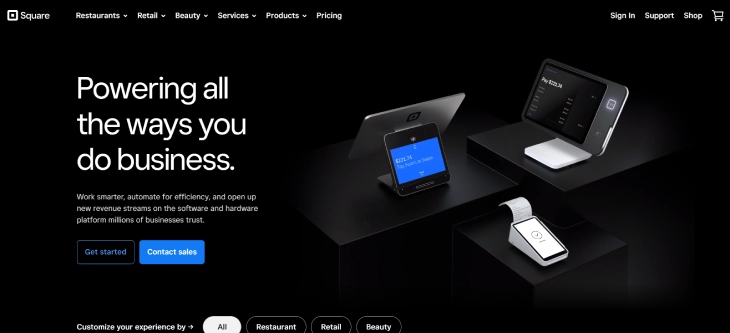
Both Square and the Wix POS system are popular choices for small businesses, but they take different approaches. Wix POS works best when you already have a Wix website and want your online and in-person sales connected. Square, on the other hand, is a standalone POS system that does not require any website platform. If you are considering running both together, our guide on how to connect Wix and Square POS explains how that works.
Square is celebrated for its simplicity and transparent pricing: you get a free card reader and pay a flat 2.6% + $0.10 per transaction. Wix POS offers deeper integration with your Wix eCommerce store but requires a paid Wix plan. Here is a comparative overview:
|
Wix POS |
Square |
|
|
Pros |
|
|
|
Cons |
|
|
Wix POS Vs. Shopify

Different business needs are served by Shopify POS and the Wix POS system. Shopify focuses heavily on eCommerce with extensive online store functionalities, while Wix POS is geared more towards businesses that want a combined website builder and point-of-sale solution.
Shopify's POS plans start at $39 per month (Basic Shopify), and Shopify POS Pro is an additional $89/month per location. Wix POS comes included with Wix eCommerce plans starting at $17/month, making it more affordable for businesses that do not need Shopify's advanced eCommerce features. Here is a comparative overview:
|
Wix POS |
Shopify |
|
|
Pros |
|
|
|
Cons |
|
|
Wix POS Vs. Lightspeed
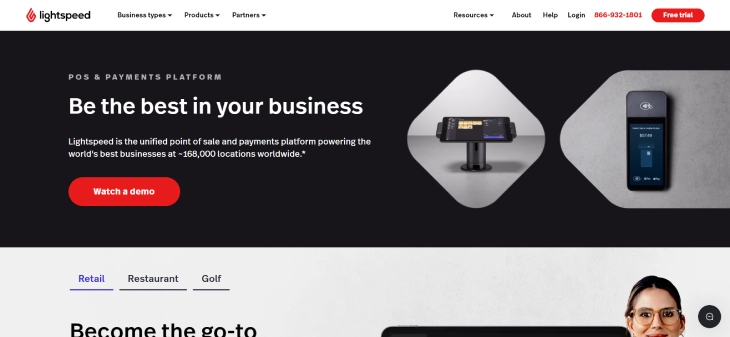
Lightspeed is tailored specifically for retail businesses with advanced needs, offering detailed inventory management and analytics that go beyond what Wix POS provides. If you run a retail store with complex inventory needs, hundreds of SKUs, multiple variants, and vendor management, Lightspeed has the edge.
However, Lightspeed starts at $89 per month compared to Wix POS which is included with eCommerce plans from $17/month. For small retailers who also need a website, the Wix POS system offers far better value. Here is a comparative overview:
|
Wix POS |
Lightspeed |
|
|
Pros |
|
|
|
Cons |
|
|
Wix POS Vs. Toast
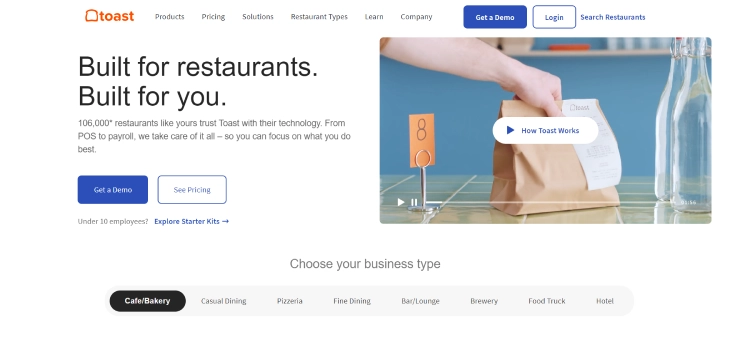
For businesses in the food industry, this is an important comparison. Toast is built specifically for restaurants, with features like menu management, table layouts, kitchen display systems, and online ordering. The Wix restaurant POS, while functional, does not go as deep into restaurant-specific workflows.
Toast pricing starts at $0/month for the Starter plan (with higher processing fees) and goes up to $69+/month for Growth plans. For a more detailed look at how Wix handles the restaurant space, check out our Wix for Restaurants review. Here is how they compare:
|
Wix POS |
Toast |
|
|
Pros |
|
|
|
Cons |
|
|
When doing a restaurant POS evaluation, the verdict here is fairly clear: Wix works well for small cafes and eateries with straightforward needs, while Toast is the stronger pick for full-service restaurants that need kitchen display systems, table management, and deep menu modifiers. Wix's advantage is its built-in online ordering tied directly to your website, which removes the need for a third-party delivery app for basic takeout orders.
Wix POS for Specific Business Types
A common pattern in search queries about the Wix POS system is that people want to know how it performs in their specific industry. Here is an honest look at how Wix POS holds up for retail stores, restaurants, and salon/beauty businesses, three of the most common use cases.
Wix Retail POS
For retail shops, the Wix retail POS system handles the fundamentals well: real-time inventory sync between your online store and physical register, barcode scanner support, and sales reporting by product and time period. The biggest strength is the unified catalog: you manage one product list for both channels, which cuts down on admin work significantly.
Wix retail POS works particularly well for boutique clothing stores, gift shops, and specialty food retailers that stock under 500 products. You can tag items with variants (size, color, flavor), set reorder alerts, and view best-sellers by time period, all from the same dashboard you use to manage your website. Staff can check inventory counts and process exchanges right from the Wix Owner app on an iPad.
The gap shows up when your store grows. Wix does not support advanced inventory features like purchase order automation, vendor performance tracking, or margin reporting per SKU. If you stock under 500 products and run a single location, Wix is more than sufficient. Beyond that, a dedicated retail platform like Lightspeed gives you more control.
Wix Restaurant POS
The Wix restaurant POS evaluation comes out positive for small and simple food businesses: cafes, food trucks, juice bars, or small eateries where the menu is straightforward and order flow is manageable. Wix handles tipping, online ordering through your own website, and basic product categories (food items, drinks, specials). That covers the core needs for most counter-service setups.
One practical advantage for restaurants is that Wix lets you take online orders directly through your website menu without paying a commission to third-party delivery apps. Customers browse your menu, place an order, and pay online. You fulfill it in-store. For a small cafe doing takeout, this is a meaningful cost saving compared to platforms that charge 15-30% per delivery order.
Where Wix falls short compared to Toast is in table management (no floor plan view), kitchen display system (KDS) support, and complex menu modifiers like combo pricing or size-based variants. Toast also has stronger offline reliability, which matters in busy restaurant environments where an internet outage cannot stop service. For a cafe doing 50-100 transactions a day, Wix works fine. For a full-service restaurant doing 300+ covers, Toast is the better choice.
Wix Salon and Beauty POS
Salon and beauty businesses get a genuine advantage with Wix POS because of how it connects with Wix Bookings. Unlike a standard retail POS, Wix lets you take appointments online and process payments at checkout from the same platform, with no separate booking software required. A client can book a haircut through your Wix website, and when they arrive, you charge them through the same system.
This appointment-plus-POS integration is one area where Wix actually outperforms many competitors in the salon space. Square does offer Square Appointments, but it is a separate product with its own setup. With Wix, the booking calendar and the register are already connected out of the box, which simplifies daily operations for stylists, estheticians, and beauty studios managing both walk-ins and scheduled appointments.
For salon-specific needs, Wix also supports tipping at checkout (which customers can add on the payment screen), staff sales tracking so you can see which stylist is generating the most revenue, and customer profiles that record service history and product purchases. If your salon sells retail products alongside services (shampoo, styling tools, skincare), the same inventory system tracks both, which is a genuine time-saver compared to managing a separate retail register.
Who Should Use Wix POS?
Based on this Wix POS system review and our evaluation of the Wix commerce POS point of sale features, here are the types of businesses that will get the most value from the Wix POS system:
- Small retailers who already have a Wix website and want to add in-store sales without managing two separate platforms. The Wix retail POS setup keeps everything unified.
- Cafes and small restaurants that need basic order management and payment processing. While not as feature-rich as Toast for complex restaurant operations, the Wix restaurant POS handles simple food service setups well.
- Pop-up shops and market vendors who need a portable, low-cost POS solution. With minimal Wix POS hardware (just a tablet and card reader), you can start accepting payments anywhere.
- Service-based businesses like salons, fitness studios, or consultants who use Wix Bookings and want to take in-person payments at their location.
- Multi-channel sellers who want a single inventory pool for both their Wix online store and physical location, without paying for a separate POS subscription.
On the other hand, Wix POS may not be the best fit for large retail operations with complex inventory needs (consider Lightspeed), high-volume restaurants requiring kitchen display systems (consider Toast), or businesses that need a POS system without being tied to a website builder (consider Square).
Final Verdict: Wix POS System Review
The Wix point of sale earns a solid recommendation for small businesses that already use Wix and want to add in-person sales. The unified dashboard, real-time inventory sync, and bundled pricing make it one of the most affordable ways to run both an online store and a physical register from a single account.
Where it falls short is offline functionality, advanced inventory management, and restaurant-specific features. If those are deal-breakers for your business, Square (for standalone simplicity), Shopify POS (for eCommerce depth), Lightspeed (for retail inventory), or Toast (for restaurants) are stronger picks in those specific areas. If you want to evaluate Wix from the restaurant side specifically, our Wix for Restaurants review covers ordering, menus, reservations, and pricing in detail.
For the small retailer, cafe owner, or service provider who values simplicity and already calls Wix home, the Wix POS system does what it needs to do, and does it at a price that is hard to beat. Once your POS is live, collect customer ratings with our guide on how to set up Wix Reviews to build trust on your product pages.
* read the rest of the post and open up an offer