

Designing a website with Wix involves six main steps: create an account, choose a template, customize the layout, add your content, optimize for SEO, and publish. Each step takes anywhere from a few minutes to a few hours depending on how polished you want the result. This guide walks through the full process, including design principles that most tutorials skip, and explains how Wix handles things like typography, mobile layouts, and visual consistency.
For a step-by-step setup guide, see how to add a blog to Wix.
Step-by-Step Guide to Designing a Website with Wix
Designing a website with Wix is an accessible process, whether you are launching a small business site or a personal portfolio. Here is how to do it.
Step 1: Create Your Wix Account
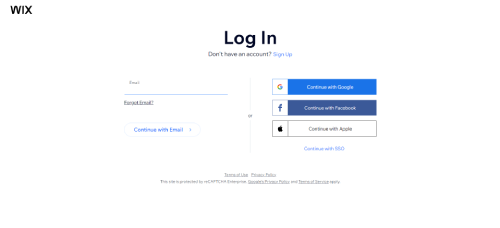
Go to Wix.com and sign up using your email address or a social media account. If you already have an account, log in and click the button to create a new site. You will be asked whether you want to use Wix ADI (the AI-assisted builder) or the classic Editor. For maximum design control, choose the Editor. The AI builder is faster but restricts how much you can customize after the initial setup.
Before you decide, our comparison of Wix AI Site Builder vs Wix Editor explains the trade-offs in detail.
Step 2: Choose a Template
Wix offers over 900 professionally designed templates across dozens of industries. Browse by category (restaurant, portfolio, online store, etc.) and pick one that fits your brand. You can always customize the template later, so focus on finding a layout that matches your content structure rather than obsessing over colors or fonts at this stage. One small but important branding touch: your favicon. See our guide on how to add a favicon to your Wix website for step-by-step instructions on setting the icon that appears in browser tabs.
Useful template resources:
- Best free Wix templates: top picks across categories
- Best Wix consulting templates: for service-based businesses
- Best Wix artist templates: for creatives and portfolios
Step 3: Customize Your Layout and Design
The Wix Editor gives you full drag-and-drop control over every element on your page. Here is what to focus on during customization:
- Colors: Set a consistent color palette using the Theme Manager. Choose 2-3 primary colors that match your brand, plus a neutral (white or light gray) for backgrounds. Avoid using more than 4-5 colors total or your site will look inconsistent.
- Fonts: Stick to 2 fonts maximum: one for headings, one for body text. Wix's Theme Manager lets you apply font choices site-wide. If you need a custom font not in Wix's library, you can upload custom fonts to Wix from sources like Google Fonts.
- Spacing and whitespace: Crowded layouts look amateur. Set consistent padding inside sections (at least 40-60px top and bottom) and leave breathing room between elements.
- Column layouts: Use the Layout panel in any strip or section to add columns to your Wix layout and organize content side by side.
- Groups: When working with multiple design items, knowing how to group elements in the Wix Editor lets you move and resize related pieces as a single unit.
Step 4: Add Your Content
Add text, images, and media to each page. For pages that include video content, see our step-by-step guide on how to add video on Wix, which covers uploading files, embedding from YouTube, and managing video galleries. A few content guidelines that improve both readability and SEO:
- Write your page titles and headings with your main keywords included naturally.
- Use clear, short paragraphs. Most website visitors scan rather than read: break up text with headings and bullet lists.
- Optimize every image with descriptive alt text and a relevant file name. This helps both accessibility and search rankings.
- For pages with large photo collections, Wix Pro Gallery gives you more layout options than a standard gallery element.
- For video content, see our guides on adding a video background and setting up Wix Video.
Step 5: Optimize for SEO
Wix includes built-in SEO tools that handle most of the technical requirements automatically. Focus on these: For a full walkthrough of text formatting options, font types, and heading styles in Wix, see our guide on adding and editing text in Wix.
- Set a unique meta title and meta description for every page. These appear in Google search results.
- Add your target keyword to the page title, first heading, and naturally throughout the body text. See our guide on how to add keywords to your Wix website for the full process.
- Use heading tags (H1, H2, H3) in the correct hierarchical order. One H1 per page, then H2 subheadings, then H3s under those.
- Connect Google Search Console to track which queries bring people to your site.
Step 6: Publish Your Website
Click the Publish button in the top right corner of the Wix Editor. Your site goes live immediately. If you have not connected a custom domain yet, Wix will give you a free subdomain (yourname.wixsite.com/site). Connect your own domain for a professional appearance.
Wix offers various premium plans that remove Wix branding, enable custom domains, and unlock additional features.
Wix Design Principles: What Separates Good Sites from Generic Ones
Anyone can follow the six steps above. The difference between a generic-looking Wix site and one that looks genuinely professional comes down to a few design fundamentals that most tutorials skip entirely.
Visual Hierarchy
Visual hierarchy is the principle that the most important element on a page should be the most visually prominent. On a typical landing page, that means your headline should be the largest text element, your subheading slightly smaller, your body text smaller still, and your call-to-action button should stand out through color contrast.
In the Wix Editor, control visual hierarchy by:
- Setting your H1 heading at least 20-30% larger than your H2s
- Making your CTA button a contrasting color: not the same color as your section background
- Keeping the most important content in the upper portion of the page, where visitors look first
Color Consistency
A common mistake on Wix sites is using too many different colors across sections. Pick one accent color and use it consistently for all buttons, highlights, and links throughout the site. Set this in Wix's Theme Manager so the color applies site-wide automatically.
For contrast, follow the WCAG AA accessibility standard: body text should have a contrast ratio of at least 4.5:1 against its background. You can check this with free tools like WebAIM's contrast checker. Wix's Editor does not enforce contrast standards, so this is something you need to check manually.
Typography That Reads Well
Font choices affect how professional your site feels. A few practical rules:
- Use a serif font (like Playfair Display or Cormorant) or bold sans-serif (like Raleway or Montserrat) for headings.
- Use a highly readable sans-serif (like Open Sans, Lato, or Roboto) for body text.
- Set body text no smaller than 16px. Most Wix templates default to 14-15px, which is too small for comfortable reading on desktop.
- Keep line height at 1.5-1.6x the font size for body text. Wix's text editor lets you set this in paragraph styles.
For a full guide to font categories, pairing strategies, and what to avoid, see our roundup of the best fonts for your Wix website.
Consistent Spacing
The quickest way to make a Wix site look more polished is to standardize your spacing. Set the same padding for all full-width sections (e.g., 80px top and bottom for desktop sections), the same gap between columns, and the same margin below headings. Inconsistent spacing is one of the top reasons sites look unfinished.
Wix Editor vs Wix Studio: Which Should You Use for Design?
Wix now offers two design environments: the classic Wix Editor and Wix Studio (formerly Editor X), which is aimed at designers and agencies.
The classic Wix Editor is the right choice for most site owners. It uses a fixed-canvas approach where you position elements freely anywhere on the page. It is fast to learn and works well for typical business sites, portfolios, and blogs.
Wix Studio introduces CSS Flexbox and Grid-based layout logic, responsive breakpoints you can customize for any screen width, and design tokens (reusable color and typography variables). It gives professional designers much finer control over responsive behavior. The trade-off: it has a steeper learning curve and is not necessary for straightforward sites.
If you are building a site for a client with specific responsive requirements, or if you are a designer who wants pixel-level control, Wix Studio is worth the learning investment. For most other uses, the classic Editor is the right tool.
Common Wix Design Mistakes to Avoid
These are the issues that most often prevent Wix sites from looking professional:
- Choosing a template and never updating the placeholder text. "Lorem ipsum" or generic template text that was never replaced signals to visitors (and Google) that the site is not complete.
- Using too many different fonts. Wix makes it easy to apply different fonts to individual elements, which leads to sites with 6 or more fonts. Set fonts site-wide in the Theme Manager and then leave them alone.
- Not checking mobile before publishing. Every change you make to the desktop layout can affect mobile. Open the mobile editor after every design session and check that nothing has broken.
- Oversized images slowing the page down. Upload images at the size they will actually display (no larger than 1400px wide for full-width sections) and use Wix's built-in optimization. Oversized images increase load time and hurt both user experience and SEO rankings.
- Leaving default page titles and meta descriptions. Wix generates these automatically from the page name, but the auto-generated versions are almost never optimized for search. Set them manually for every page.
- No clear call-to-action. Every page should have one primary action you want visitors to take. Make it obvious: a prominent button with specific text like "Get a Free Quote" outperforms a plain "Contact Us" link every time.
Benefits of Using Wix for Website Design
Wix is a popular platform for website design, offering a flexible solution for both beginners and experienced designers. Here are the key advantages:
User-Friendly Interface
The drag-and-drop editor makes it possible for anyone to build and update a site without code. The editor includes undo history, autosave, and a preview mode so you can experiment safely. Wix also offers a dedicated mobile editor for fine-tuning how your design looks on smaller screens.
Wide Range of Templates
With 900+ templates across dozens of industries, Wix covers most use cases. Templates are fully customizable. You can change any color, font, image, layout, or element without touching code.
Mobile-Friendly by Default
Every Wix template is mobile-responsive. The platform includes a separate mobile editor so you can adjust layouts, hide elements, or rearrange sections specifically for mobile visitors without affecting the desktop view.
Built-In SEO Tools
Wix provides meta tag fields, URL customization, automatic sitemap generation, and structured data support. The SEO Wiz tool guides you through page-by-page optimization with actionable steps.
App Market for Extended Functionality
The Wix App Market includes apps for eCommerce, bookings, events, email marketing, live chat, reviews, and more. Many of the most popular apps (Wix Bookings, Wix Stores, Wix Events) are built by Wix itself, which ensures they integrate cleanly with your site's design and data.
Designing for Conversion: How to Turn Visitors Into Customers
A site can look beautiful and still fail to produce results. The reason is usually a gap between designing for aesthetics and designing for conversion. Aesthetic design focuses on how a site looks. Conversion design focuses on what a visitor does. The two goals overlap, but when they conflict, conversion should win.
The Five-Second Hero Test
The section above the fold (the area visible without scrolling) has one job: communicate your value proposition in five seconds or less. A visitor who cannot immediately understand what you do and why it matters to them will leave. Your hero section should state who you help, what outcome you provide, and include a single, specific call-to-action button. Remove anything decorative that does not serve those three goals.
CTA Button Copy and Placement
Generic button text like "Submit" or "Learn More" performs worse than action-specific copy. Use language that describes what happens next: "Get My Free Quote," "Start My Free Trial," or "Book a 20-Minute Call." Place your primary CTA button in the hero section, then repeat it at logical pause points as the visitor scrolls down (after your key benefits section, after testimonials, before the footer).
Trust Signals: Position Them Where Doubt Lives
Trust signals include client logos, testimonials, certifications, review counts, and press mentions. The most effective placement is either just below the hero (to validate the headline claim immediately) or directly beside a CTA button (to remove hesitation at the moment of decision). A testimonial buried at the bottom of the page after the fold gets far less attention than one placed next to your primary offer.
Directional Cues and Visual Flow
The human eye follows visual cues. Photos of people looking toward a button or headline draw attention in that direction. Arrows and diagonal lines create momentum down the page. In Wix, you can control flow by how you arrange elements within a strip: pair a photo on the left facing right with text and a CTA on the right, and visitors will naturally read across in the intended order. You can also add animations in Wix to guide the eye to key elements as visitors scroll.
The One Goal Per Page Principle
Every page should have one primary action you want a visitor to take. More than one competing goal (book a call, sign up for a newsletter, browse products, download a PDF) splits attention and reduces the chance of any action happening. Use Wix's section-by-section layout to guide visitors step by step: introduce the problem, present your solution, show proof, then present the CTA. Each Wix strip is a natural stage in that sequence.
Form Design That Gets Completed
Contact forms and lead capture forms perform better with fewer fields. Every additional field reduces completion rates. Start with the minimum: name, email, and one qualifying question. If you need more information, use a multi-step form (Wix's form builder supports this) with a progress indicator so visitors know how close they are to finishing.
Color Psychology for Different Business Types
Color affects how visitors feel before they read a single word. The right palette builds trust and familiarity with your audience. The wrong one creates friction, even if visitors cannot articulate why. Matching your color choices to your business type is one of the simplest improvements you can make in the Wix Theme Manager.
Color Guidance by Business Type
- Healthcare and wellness: Blues and greens communicate calm, safety, and trust. These are the right base colors for clinics, therapists, yoga studios, and supplement brands. Avoid red as a dominant color unless you are specifically creating urgency (such as a "Book Now" button on a high-demand appointment service).
- Legal and financial services: Navy, charcoal, and dark gray convey authority and stability. A gold or deep amber accent adds a sense of established credibility. Avoid bright or playful colors, which can undermine the professional tone clients expect from lawyers, accountants, and advisors.
- Food and restaurants: Warm colors, including red, orange, and yellow, have a documented effect on appetite and create a sense of energy and excitement. Avoid cool blues and grays, which can feel clinical and actually suppress appetite associations.
- Tech and SaaS: Deep blues and purples with bright, high-contrast accent colors (electric blue, green, or white text on dark backgrounds) signal innovation and precision. Many successful SaaS brands use a dark-mode base palette because it photographs well in screenshots and feels modern.
- Creative professionals and portfolios: Black and white with a single bold accent color keeps the design from competing with the work being shown. The accent color (a rust, electric blue, or vivid green) becomes a signature that is consistent across every touchpoint without distracting from the portfolio itself.
- Retail and fashion: The right choice depends on brand positioning. Luxury brands use black, white, and gold to signal exclusivity. Brands aimed at younger or more energetic markets use saturated, bright colors to match a bold, confident voice.
How to Apply Colors in Wix
Open the Wix Theme Manager from the Editor's left panel. Set your primary, secondary, and accent colors here, and they will apply across buttons, headings, and background sections site-wide. Choose one accent color and use it only for interactive elements: buttons, links, and highlights. Using your accent color in more than those contexts weakens its impact as a visual signal.
Test Colors on a Real Phone Screen
Colors look different on OLED phone screens than on LCD monitors or MacBook displays. OLED screens produce deeper blacks and more saturated colors, which means a palette that looks balanced on a desktop monitor can appear overly intense or garish on a phone. Before finalizing your color choices, view your site preview on an actual mobile device. The Wix Share Preview link (in the top right of the editor) lets you open the site on your phone without publishing it publicly.
Testing Your Wix Website Design Before Publishing
The Wix Editor preview is useful, but it is not a substitute for testing on real devices and real browsers. What looks correctly spaced in the editor can have overlapping elements in Safari. A form that submits in the preview might silently fail on the live site. Running through a structured checklist before you hit Publish catches these problems before visitors do.
7 Checks to Run Before Publishing
- Mobile preview in the Wix mobile editor. Switch to mobile view within the Editor and scroll through every page. Every text block should be fully visible, every button should be large enough to tap (at least 44px tall), and no elements should overlap. Pay particular attention to hero sections, where desktop layouts with side-by-side columns often stack awkwardly on mobile.
- Test on an actual phone browser. Use the Wix Share Preview link to open your site on a real device. The editor's mobile view approximates mobile rendering but does not replicate it exactly. On a real phone you will see actual tap targets, real font rendering, and how images load on a mobile connection.
- Cross-browser check. Open your published (or preview) URL in Chrome, Safari, and Firefox. Fonts, shadows, and some CSS effects render differently across browsers. Safari in particular handles certain animations and gradients differently from Chrome. If most of your audience is on iPhone, Safari compatibility deserves extra attention.
- Page load speed with Google PageSpeed Insights. Paste your published URL into Google PageSpeed Insights. Pay attention to the "Largest Contentful Paint" score, which measures how quickly your main content appears. Common culprits on Wix sites are oversized hero images and too many third-party app scripts. Aim for a mobile score above 60 and a desktop score above 80.
- Image quality check. View every page at full zoom on a large monitor. Look for blurry images (uploaded at too low a resolution), stretched images (where the aspect ratio was changed), and any images that appear pixelated in Retina or high-DPI displays. Wix serves images at appropriate resolutions when you upload them at the correct size, so the source file quality matters.
- Full link check. Click every navigation link, every button, every in-text link, and every CTA. Broken links and buttons that go nowhere are among the most trust-damaging issues a site can have. This is especially important for cloaked or redirect links in your navigation, which can break if slugs are changed.
- Form submission test. Fill out your contact form (or any lead capture form on the site) using a personal email address and submit it. Check that you receive the notification email within a few minutes. Wix forms can fail silently if email notifications are misconfigured, and many site owners discover this only when they realize they have not received an inquiry in weeks.
Preview Mode vs. Live URL Testing
Wix's Preview mode in the editor shows a rendering of your site but does not use your live domain or full production infrastructure. For speed tests, always use a published URL. PageSpeed Insights and similar tools cannot test an editor preview URL; they require a publicly accessible page. If you want to test before going fully public, publish the site and temporarily hide it from search engines in your Wix SEO settings, then run your speed and content tests on the live URL before removing the search engine block.
After Your Site Is Live
Once your site is published, these resources cover the most common next steps:
- Need to update content? See our guide on how to edit your Wix website.
- Want to change your template? Here is how to change a Wix template without losing your content.
- Building with a team? Wix's collaboration tools let you assign roles and give others editing access.
- Want to add navigation for growing content? Adding a search bar to your Wix site helps visitors find content without relying on menus.
- Comparing Wix to alternatives? Our Wix vs Duda guide covers the key differences.
* read the rest of the post and open up an offer
While Wix offers extensive flexibility, it may have limitations in ultra-specific customizations and deep integration of complex backend functionalities compared to custom-coded sites.
Yes, Wix allows you to upload your own fonts or choose from a vast collection of free fonts provided by the platform to ensure your site matches your brand’s style.
When designing a Wix website, start by browsing templates filtered by your industry or site purpose — Wix organises its 900+ templates into categories like business, portfolio, and online store. Pick a layout whose structure matches your content needs (for example, image-heavy layouts for photographers, or multi-column layouts for shops), then customise colours, fonts, and sections to fit your brand. The drag-and-drop editor lets you rearrange or remove any section, so the template is a starting point, not a constraint.
The three that matter most are: (1) Visual hierarchy — make sure the most important content is the most prominent. Your main headline should be the biggest text element on the page, and your CTA button should stand out through color contrast. (2) Color consistency — set a palette of 2-3 colors in the Theme Manager and use them across the entire site. Inconsistent colors are the most common sign of an amateur build. (3) Typography — limit yourself to 2 fonts (one for headings, one for body text) and set body text no smaller than 16px. These three fixes will improve almost any Wix site.
Start with Wix's built-in Preview mode (the "Preview" button in the top right of the Editor), which shows how your site will look without making it live. For testing on real devices, use the Share Preview link to open the site on your phone or send it to someone else for feedback. Before publishing, click through every navigation link and CTA button to confirm nothing is broken, fill out and submit your contact form to verify you receive the notification email, and switch to the Wix mobile editor to check that layouts display correctly on smaller screens. Speed testing requires a published URL, so if you want PageSpeed Insights data, publish your site first and temporarily block it from search engines in your Wix SEO settings while you run tests.
The most reliable rule is to limit your palette to three or four colors: a primary color, a secondary color, a neutral (white or light gray for backgrounds), and one accent color reserved for buttons and interactive elements. Set these in Wix's Theme Manager so they apply consistently across every page without manually updating individual elements. Color choices should match your audience's expectations for your industry: blues and greens for healthcare and wellness, navy and charcoal for legal and financial services, warm tones for food businesses, and bold contrasts for tech or creative work. Once set, avoid introducing extra colors for individual sections, as inconsistency is one of the most visible signs of an unprofessional build.