

Good news: if you have a Wix website, SSL is already enabled automatically. Every Wix site, on free and paid plans, gets a free SSL certificate that keeps your visitors' data encrypted and displays the padlock icon in the browser. You do not need to flip a switch or visit a security settings page to turn it on.
What you can do is verify that HTTPS is working correctly, make sure your custom domain is connected properly so SSL applies to it, and fix any mixed content warnings that might stop browsers from showing your site as fully secure. This guide walks you through all of that, plus explains why the Wix SSL certificate matters for your SEO and your visitors' trust.
If you are just getting started with Wix, see our guide on how to use Wix for a full platform overview.
- SSL on Wix is automatic and free: every site gets HTTPS without any manual setup.
- To apply SSL to a custom domain, connect it through Settings > Domains first.
- If your site still shows as insecure, a mixed content issue (HTTP images or scripts) is usually the cause.
- A valid Wix SSL certificate improves Google rankings and builds trust with visitors.
Does Wix Automatically Enable SSL?
Yes. Wix automatically provisions and manages SSL certificates for all sites on its platform. The moment you publish your Wix site, whether on a free wix.com subdomain or a custom domain, Wix secures it with HTTPS at no extra cost. There is no toggle to enable, no certificate to purchase, and no renewal to manage manually.
This is different from self-hosted platforms like WordPress, where you may need to install an SSL certificate yourself. With Wix, the heavy lifting is done for you. The Wix SSL certificate is issued, installed, and renewed automatically so your site stays protected year-round.
Does Wix Automatically Redirect HTTP to HTTPS?
Yes. Wix forces HTTPS for all traffic. If someone types your site address with http:// or clicks an old http:// link, Wix's servers automatically redirect them to the secure https:// version. You do not need to set up any redirect rules or edit any configuration files.
This redirect happens at the server level, before the page even loads, so visitors never see an insecure version of your site. For custom domains, the redirect activates automatically once the domain is correctly connected through Wix and DNS has propagated. This usually takes a few hours, and up to 24 hours in some cases.
One practical implication: if you have shared any http:// links to your site (in emails, social posts, or other websites), those links will still work correctly. The automatic redirect catches them all.
How To Verify SSL Is Working On Your Wix Site
Even though SSL is on by default, it is worth confirming that your site is actually serving over HTTPS, especially after connecting a custom domain. Here is how to check:
Step 1: Log Into Your Wix Account
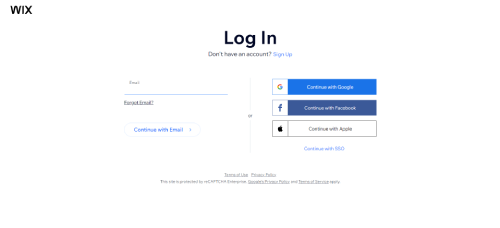
Go to Wix.com and sign in to your account. If you are new to Wix, you can create a free account and publish your site before following the steps below.
Step 2: Open Your Site in a Browser
Click "Preview" or open your published site URL in any browser. Look at the address bar. Your site URL should begin with https://, not http://. You should also see a padlock icon to the left of the URL.
If the URL starts with https:// and the padlock is visible, your Wix SSL certificate is active and working correctly.
Step 3: Check Your Domain Settings
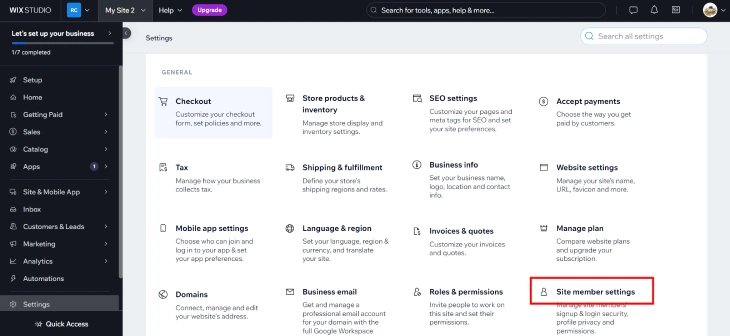
If you are using a custom domain and the padlock is not showing, the domain connection may be incomplete. From your Wix dashboard, go to Settings > Domains. Here you can see all connected domains and their status. A properly connected domain will have SSL applied automatically by Wix. No extra steps needed.
If you have not connected your own domain yet, our guide on how to connect a domain to Wix walks through the full process.
Step 4: Check for Mixed Content Warnings

Sometimes a site loads over HTTPS but still shows a warning because some elements, like images, videos, or scripts, are being loaded over plain HTTP. This is called a mixed content issue. Browsers like Chrome may show a "Not Secure" warning even if your SSL certificate is valid.
To identify mixed content issues, right-click your page in Chrome, select "Inspect," and open the Console tab. Any HTTP resources will be flagged there. In Wix, the most common cause is an external image or embed added with an http:// URL. Update those URLs to https:// and the warning should clear.
Step 5: Confirm HTTPS Across All Pages
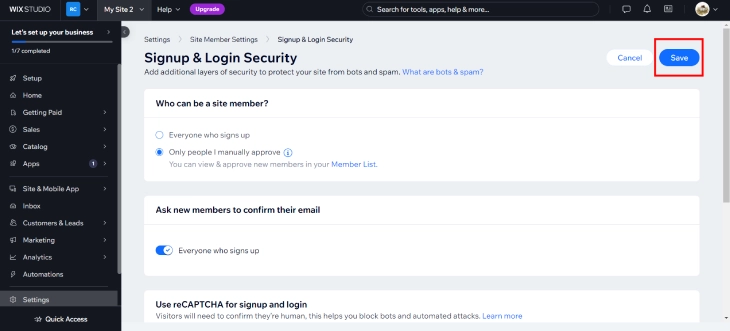
Browse a few key pages on your site: home, contact, any pages with forms or payments, and confirm each one loads with https:// and the padlock. If you added a custom domain recently, allow up to 24 hours for the SSL certificate to fully propagate. Wix handles this automatically, but DNS changes can take time to settle.
Why SSL Matters for Your Wix Site
Even though Wix handles SSL automatically, understanding why it matters helps you appreciate the value it provides and motivates you to make sure it is working correctly on your custom domain.
Security
The Wix SSL certificate encrypts all data transmitted between your visitors' browsers and Wix's servers. This means that contact form submissions, login credentials, and payment information are protected from interception. Without SSL, that data travels as plain text, readable by anyone on the same network.
SEO and Google Rankings
Google has used HTTPS as a ranking signal since 2014. Sites served over a secure connection get a small but real ranking boost over HTTP equivalents. More importantly, Google may flag non-HTTPS pages as "not secure" in Chrome, which drives visitors away before they even read your content. Keeping your Wix SSL certificate active protects your search visibility. To learn more about how Wix handles hosting that makes this possible, see does Wix host websites.
Trust and Credibility
The padlock icon is a signal that visitors have come to expect. Studies consistently show that users are less likely to submit forms, make purchases, or share personal information on sites that display a "Not Secure" warning. With Wix's automatic SSL, that padlock is always present, giving your visitors confidence in every interaction.
SSL and Wix eCommerce: Why Every Wix Store Needs It
If you run a Wix store, SSL is not just a technical checkbox. It is one of the most direct factors that determines whether a shopper completes a purchase or leaves without buying.
When a visitor lands on your product page, their browser checks the connection before anything else. A valid HTTPS certificate triggers the padlock icon in the address bar, and that small visual cue carries real weight. Shoppers have been trained to look for it. Research across eCommerce platforms consistently shows that "Not Secure" warnings cause significant drop-off at the checkout stage, where customers are most ready to buy. Losing a sale at that point is the most costly version of a trust problem.
Here is what SSL specifically protects in a Wix store:
- Payment information: Credit card numbers, billing addresses, and CVV codes are encrypted in transit so they cannot be intercepted between the buyer's browser and Wix's servers.
- Customer account data: Login credentials and personal details stored by shoppers in their accounts are protected from network-level eavesdropping.
- Order confirmation pages: Even after payment is processed, order summary pages contain sensitive data that should stay encrypted.
- Contact and inquiry forms: Store inquiry forms collect names, emails, and phone numbers. SSL keeps that information private.
From a compliance standpoint, any site that accepts card payments must meet PCI DSS (Payment Card Industry Data Security Standard) requirements. Wix handles PCI compliance for its native checkout, which means the payment infrastructure your store runs on is already secured and certified. SSL is a required part of that certification. You do not need to manage it separately, but it is worth knowing that Wix's automatic SSL is part of what allows you to accept payments legally and safely.
Browser makers have made the stakes clearer over time. Google Chrome labels all HTTP pages as "Not Secure" in the address bar. For a store, that warning appears on every product page, every cart page, and every checkout step that loads over HTTP. It looks like a security alert to the customer, even if the actual risk is about the connection rather than your site specifically. With Wix, that scenario does not apply. HTTPS is the default for every page, including your storefront, cart, and checkout.
What Your Wix SSL Certificate Actually Is
You have probably heard the terms SSL and TLS used interchangeably. Technically, TLS (Transport Layer Security) is the current standard. SSL (Secure Sockets Layer) is an older predecessor that has been deprecated for years. But because "SSL" became the popular shorthand, the industry still uses both terms to mean the same thing: the protocol that encrypts data between a browser and a web server.
When Wix issues a certificate for your site, it is a TLS certificate in practice. It tells browsers three things: your site is who it claims to be, the connection is encrypted, and a trusted certificate authority has verified the domain. The padlock icon is the browser's way of confirming all three conditions are met.
Wix provisions certificates through an automated certificate authority. This means certificates are issued, installed, and renewed without any action from you. When a certificate approaches expiry (typically around 90 days for auto-managed certificates), Wix renews it automatically before the old one expires. Your site never goes offline due to a lapsed certificate, which is a common problem on self-hosted platforms where the site owner is responsible for renewals.
How to Inspect Your SSL Certificate in Chrome
If you want to see the actual certificate details for your Wix site, Chrome makes this accessible in a few clicks:
- Open your Wix site in Google Chrome.
- Click the padlock icon to the left of the URL in the address bar.
- In the dropdown panel, click "Connection is secure".
- Click "Certificate is valid" to open the certificate viewer.
- In the General tab, you will see the certificate's Issued To field (your domain), the Issued By field (the certificate authority), and the Valid From / Valid To dates showing the current validity period.
- Click the Details tab to see the cryptographic details, including the signature algorithm (typically SHA-256 with RSA or ECDSA) and the public key information.
The "Issued By" field tells you which certificate authority signed your certificate. The "Issued To" field will show your domain name. The validity window confirms when the certificate expires and when it was issued, which gives you a sense of how recently Wix renewed it. For most Wix site owners, this inspection step is purely informational. The certificate works automatically and does not require you to act on anything you see in the details panel. But if you ever need to verify SSL status for a client, a developer, or a compliance review, this is where to look.
HSTS: How Wix Goes Beyond Basic HTTPS
Redirecting HTTP traffic to HTTPS is a good start, but it has one gap: the very first request from a new visitor still goes out over HTTP before the redirect kicks in. For a split second, the connection is unencrypted. HSTS closes that gap.
HSTS stands for HTTP Strict Transport Security. It is a security policy sent in the HTTP response header that instructs browsers to always connect to a domain over HTTPS, without ever attempting an HTTP connection first. Once a browser has seen the HSTS header for a domain, it enforces HTTPS at the browser level on all future visits, before any network request is made.
Wix sends the Strict-Transport-Security header on all sites. A typical value looks like this:
Strict-Transport-Security: max-age=31536000; includeSubDomains
Breaking that down:
- max-age=31536000 tells the browser to enforce HTTPS for the next 31,536,000 seconds (one year). Each time the visitor returns and sees the header, that timer resets.
- includeSubDomains extends the policy to all subdomains of your domain, not just the root domain.
The practical difference between HSTS and a basic HTTP redirect is meaningful. With a redirect alone, a network attacker could intercept that first unencrypted HTTP request before the redirect happens, a technique known as an SSL stripping attack. HSTS makes this impossible for returning visitors because the browser never sends the HTTP request in the first place.
There is also the HSTS preload list, maintained by browser vendors. Sites that meet certain criteria can be submitted to this list, which embeds HSTS policy directly into the browser itself. Even a brand-new visitor on a first-ever connection gets HTTPS-only enforcement, with no initial HTTP request at all. Wix's infrastructure is built to support this level of HSTS protection, meaning your site benefits from a strong HTTPS policy from day one, without any setup on your part.
Common SSL Error Messages on Wix and What They Mean
Even with Wix's automatic SSL, visitors or developers sometimes encounter error messages in the browser. Here is what the most common ones actually mean and what you should do about each:
Padlock Icon With a Warning Triangle
This symbol - a padlock with an exclamation mark or yellow warning sign - means the page is loading over HTTPS but contains mixed content. Some resource on the page (an image, a script, or an iframe) is being fetched over plain HTTP. The SSL certificate itself is valid; the warning is about the insecure resource, not the certificate. Fix: identify the HTTP resource using Chrome DevTools (Inspect > Console), then update its URL to https://.
NET::ERR_CERT_AUTHORITY_INVALID
This error means the browser does not trust the certificate authority that issued your SSL certificate. This rarely happens on Wix because Wix uses widely trusted authorities. If you do see it, the most likely causes are: a browser with outdated root certificates, a corporate network that intercepts HTTPS traffic, or an antivirus tool that inspects encrypted traffic. In most cases, the fix is on the visitor's end, not yours. If multiple users report this on your Wix site, contact Wix Support to verify the certificate chain is complete.
NET::ERR_CERT_COMMON_NAME_INVALID
This error means the domain on the certificate does not match the domain in the browser's address bar. On Wix, you would typically see this if a custom domain is connected but the SSL certificate has not yet been issued for it. Allow up to 24 hours after connecting a domain for the certificate to be provisioned. If it persists beyond that, go to Settings > Domains, disconnect and reconnect the domain, then wait again.
"Your Connection Is Not Private" (Chrome) or "Your Connection Is Not Secure" (Firefox)
This is a general SSL failure page shown when the browser cannot establish a secure connection at all. On a Wix site, this almost always means the custom domain connection is incomplete or the DNS records are not pointed correctly. Return to Settings > Domains, verify the domain status, and confirm your DNS records match what Wix requires. If you recently transferred your domain to a new registrar, DNS propagation can delay the SSL activation.
SSL, Google Business Profile, and Local SEO
If your Wix site supports a physical business and you have a Google Business Profile listing, HTTPS matters beyond just your website rankings. It affects how Google treats your business overall.
Google Business Profile (formerly Google My Business) lets you list a website URL with your business profile. If that URL starts with http:// rather than https://, Google may flag the discrepancy, and Chrome will display a "Not Secure" warning to anyone who clicks your business website link from the map results. A "Not Secure" warning in that context is particularly damaging because the user is already evaluating your business and making a trust decision at the same moment.
Beyond the trust signal, Google has confirmed that a site's overall health, including HTTPS status, factors into how it performs in local pack rankings. A site flagged as "Not Secure" is at a disadvantage compared to equivalent local competitors running HTTPS. Since Wix handles SSL automatically, this is one advantage you get without any extra work, as long as your custom domain is connected correctly.
To make sure your Google Business Profile and your Wix site are aligned:
- Verify that the URL in your Google Business Profile starts with https:// and matches your actual Wix site domain.
- If you recently moved from a wix.com subdomain to a custom domain, update the URL in your Business Profile to reflect the new address.
- After updating the URL, check that Google is not showing a cached insecure version by searching your business name and clicking the website link from the results.
Local citations (directory listings on sites like Yelp, TripAdvisor, and industry directories) should also list your https:// URL, not the http:// version. Inconsistencies between your Google Business Profile URL and your citation URLs can weaken local SEO signals. Once you have your Wix SSL confirmed and working, do a quick audit of your top citations to ensure they all point to the correct https:// address.
Troubleshooting: Why Is My Wix Site Still Showing as Not Secure?
If your Wix site is loading with a warning despite SSL being automatic, here are the most common causes and fixes:
- Custom domain not fully connected: Go to Settings > Domains and verify the domain status. An incomplete DNS setup can prevent SSL from activating on a custom domain. See our domain connection guide for help.
- Mixed content: An image, iframe, or script on your page is loading over HTTP. Update all external resource URLs to HTTPS to clear the warning.
- DNS propagation delay: After connecting a domain, allow up to 24 to 48 hours for changes to propagate globally. The SSL certificate will activate automatically once DNS is resolved.
- Using a third-party domain registrar: If your domain is registered outside Wix, confirm the nameservers or DNS records are pointed correctly per Wix's instructions. The most common fix is to update the domain's nameservers at your registrar (such as GoDaddy, Namecheap, or Google Domains) to the nameservers Wix provides in Settings > Domains.
- Browser cache: If you recently fixed a domain or mixed content issue, clear your browser cache and reload the page. The browser may be serving a cached insecure version even though the issue is resolved.
Your Wix Site Is Already Secure
Enabling SSL on Wix is not something you need to do manually. Wix takes care of it for every site automatically. What you do need to do is connect your custom domain correctly, verify the HTTPS padlock is showing, and fix any mixed content issues that could undermine your site's security signal.
By taking a few minutes to confirm your Wix HTTPS setup is working properly, you protect your visitors, support your Google rankings, and ensure your site projects the trustworthy image your brand deserves.
* read the rest of the post and open up an offer