

Wix is the better choice if you want an all-in-one website builder with drag-and-drop editing, built-in hosting, and no coding required. HostGator is the better choice if you need traditional web hosting with full server control, especially for running WordPress or other CMS platforms. The key thing to understand is that these two services are not direct competitors: Wix is a website builder, while HostGator is a web host. Picking between them depends on whether you want someone to handle the technical side for you (Wix) or whether you want to manage your own hosting environment (HostGator).
This comparison breaks down pricing, ease of use, design options, features, and customer support so you can decide which platform fits your project. Whether you are searching for "hostgator vs wix" or "wix vs hostgator," the answer comes down to what kind of site you are building and how much technical work you are willing to take on.
Wix vs HostGator: The Fundamental Difference
Before comparing features, it helps to understand what each platform actually is. Wix is a website builder. You sign up, pick a template, drag elements onto the page, and publish. Hosting, security certificates, and software updates are all handled for you. You never touch a server.
HostGator is a web hosting company. It rents you server space where you install whatever software you want, most commonly WordPress. You get a cPanel dashboard, root-level access on higher-tier plans, and the freedom to run custom scripts. But you also take on responsibility for updates, backups, and security configurations.
Think of it this way: Wix is like renting a fully furnished apartment. HostGator is like leasing an empty warehouse and fitting it out yourself. Neither approach is wrong, but they suit different people.
Wix vs HostGator: Quick Comparison Table
|
Price (Starting) |
Ease of Use |
Design and Customization |
Features and Functionality |
Customer Support |
|
|
Wix |
$17/month |
|
|
|
|
|
HostGator |
$3.75/month |
|
|
|
|
Pricing: Wix vs HostGator (2026)
Pricing is usually the first thing people compare, but the numbers alone are misleading here. HostGator's plans cost less per month, yet they only cover hosting. Wix's plans cost more, but they bundle hosting, a website builder, templates, and built-in apps into one price.
Wix Pricing Plans (2026)
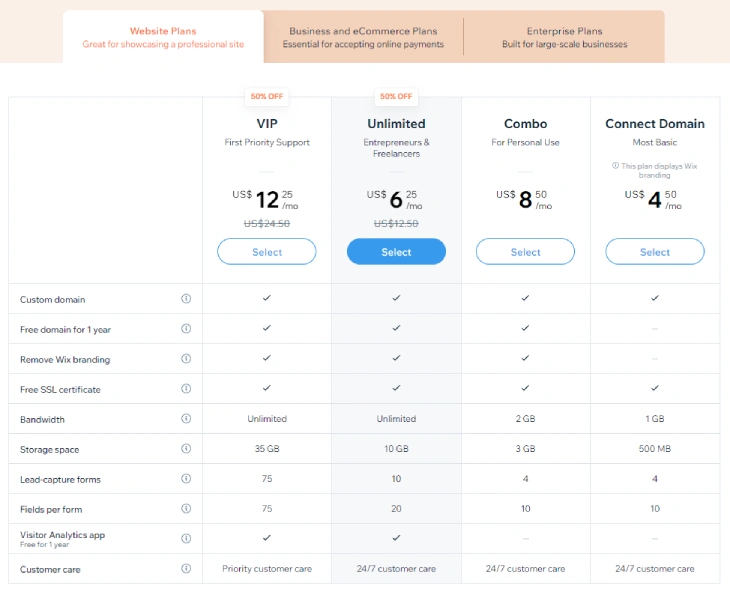
Wix offers a range of pricing plans that bundle everything you need to build and run a website. As of 2026, the paid tiers look like this:
- Light: $17/month -- custom domain, basic site with limited storage
- Core: $29/month -- more storage, basic eCommerce, and analytics
- Business: $36/month -- full eCommerce, subscriptions, automated sales tax
- Business Elite: $159/month -- priority support, advanced features, VIP tools
Wix also has a free tier, but it places Wix ads on your site and uses a Wix subdomain, so it is only suitable for testing.
HostGator Pricing Plans (2026)
HostGator's shared hosting plans are priced for budget-conscious users. The 2026 introductory rates are:
- Hatchling Plan: $3.75/month -- single domain, unmetered bandwidth, free SSL
- Baby Plan: $4.50/month -- unlimited domains, same resources
- Business Plan: $6.25/month -- adds a free dedicated IP and SEO tools
HostGator also offers VPS hosting (starting around $23.95/month) and dedicated servers (starting around $89.98/month) for sites that need more power. Keep in mind that introductory prices rise at renewal, sometimes doubling.

The Hidden Cost Factor
HostGator's sticker price is lower, but there is a catch. You still need a way to build your website. If you install WordPress (free), you may still pay for a premium theme ($30-$80 one-time) and plugins for forms, SEO, security, and backups ($50-$200/year combined). When you add those costs, the gap between HostGator and Wix narrows significantly. With Wix, those tools are already included in the monthly price.
Ease of Use: Wix vs HostGator
Drag-and-Drop Editing
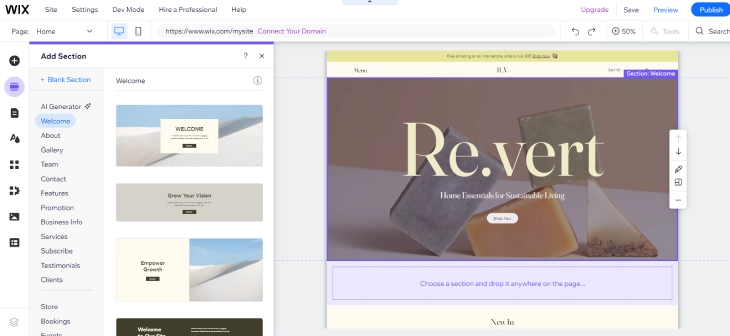
Wix is built around a drag-and-drop editor. You click on any element -- text, images, buttons, forms -- and move it anywhere on the page. No code, no file managers, no terminal commands. The editor previews exactly what visitors will see, so there is no guessing.
HostGator does not include a visual editor. Once you have hosting, you need to install a CMS like WordPress and then use that CMS's editor to build pages. WordPress's block editor (Gutenberg) is reasonably easy to learn, but it is an extra step compared to Wix, and you are responsible for keeping WordPress, your theme, and your plugins updated.
Dashboard and Site Management
Wix's dashboard is a single control panel where you manage your site content, domain, email, analytics, SEO settings, and apps. Everything is in one place with clear labels.
HostGator uses cPanel, the industry-standard hosting control panel. cPanel is powerful but can feel overwhelming at first. It has dozens of icons for file management, database administration, email accounts, DNS settings, and more. Experienced developers appreciate the control; first-time site owners may find it intimidating.
Learning Curve
If you have never built a website before, Wix will get you from zero to published faster. Most users can have a basic site live within an hour. With HostGator, expect to spend time installing WordPress, choosing a theme, configuring plugins, and learning how the pieces fit together. That process can take a full afternoon or longer for a beginner.
Design and Customization: Wix vs HostGator
Templates and Themes
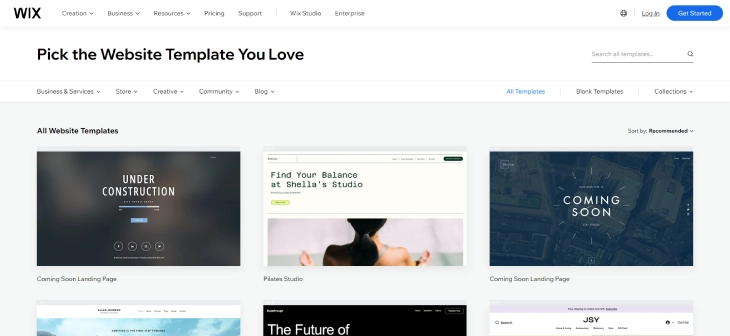
Wix offers over 900 free templates organized by industry: restaurants, portfolios, online stores, blogs, and more. Each template is fully customizable through the visual editor. Wix also introduced an AI site builder that generates a starter design based on your answers to a few questions.
HostGator does not provide templates because it is a hosting service, not a builder. Your template options depend entirely on the CMS you install. WordPress alone has thousands of free and premium themes available through its repository and third-party marketplaces like ThemeForest.
Design Flexibility
Wix gives you pixel-level control through its visual editor. You can place any element anywhere on the page, adjust spacing down to the pixel, and change fonts, colors, and animations without writing code. The tradeoff is that you cannot access the underlying source code, so you are limited to what the editor allows.
HostGator gives you the opposite: total code access. You can edit HTML, CSS, JavaScript, and PHP files directly. If you pair HostGator with WordPress, you can modify theme files, write custom functions, and install any plugin. The design ceiling is higher, but reaching it requires technical skill.
Features and Functionality: Wix vs HostGator
eCommerce
Wix eCommerce is built into the platform. Business-tier plans include product listings, shopping carts, secure checkout, abandoned cart recovery, automated sales tax, and shipping label printing. You can start selling within minutes of setting up your site.

HostGator does not include eCommerce features. To sell online, you need to install a separate platform. The most common pairing is WordPress with WooCommerce, which is free to install but often requires paid extensions for payment gateways, shipping calculators, and other store features. Alternatives include Magento and PrestaShop, both of which run on HostGator's servers.

SEO Tools
Wix includes a built-in SEO setup wizard that walks you through meta tags, page titles, URL slugs, alt text, and connecting to Google Search Console. It also generates a sitemap automatically and lets you set custom redirects from the dashboard.
HostGator does not have built-in SEO tools. When using WordPress on HostGator, most people install a plugin like Yoast SEO or Rank Math to handle on-page optimization. These plugins are powerful (often more granular than Wix's built-in tools), but they require configuration and occasional updates.
Scalability and Server Resources
This is where HostGator pulls ahead for certain users. Wix runs every site on its shared infrastructure. You cannot choose your server location, adjust PHP memory limits, or add custom caching layers. For most small and mid-size sites, that is fine. But if your site grows to hundreds of thousands of monthly visitors or needs custom backend logic, Wix may feel limiting.
HostGator lets you start on shared hosting and move up to VPS or dedicated servers as your traffic grows. You get full control over server configuration, which matters for high-traffic sites, custom web applications, or sites with heavy database queries.
Third-Party Integrations
Wix has the Wix App Market with 500+ integrations covering live chat, email marketing, social media feeds, booking systems, and more. Adding an app takes a few clicks.
HostGator's integration options depend on your CMS. WordPress has over 60,000 plugins, which is far more than Wix's app market. However, managing dozens of plugins introduces compatibility risks and security concerns that you need to monitor yourself.
Customer Support: Wix vs HostGator
Support Channels
Wix offers 24/7 support through chat and a callback system where an agent calls you at your chosen time. The help center includes written guides, video walkthroughs, and a community forum. Higher-tier plans get priority queue access.
HostGator also provides 24/7 support via phone, live chat, and email. Their knowledge base is large, with step-by-step articles covering cPanel, WordPress, DNS, and common troubleshooting tasks. Community forums are active and well-moderated.
Support Quality and Focus
Wix's support team specializes in the Wix platform. They can help with editor questions, billing, app integrations, and site settings. Since they built the tool, their support is tightly focused.
HostGator's support team focuses on hosting issues: server uptime, DNS records, email setup, SSL certificates, and cPanel configuration. They can help install WordPress but generally will not troubleshoot theme conflicts or plugin errors. For CMS-level issues, you would need to contact the theme or plugin developer separately.
Quick Verdict: Wix vs HostGator
If you want a website builder with hosting included, Wix is the straightforward answer. Everything is handled in one platform. If you want web hosting to run WordPress and you are comfortable managing your own setup, HostGator is the better fit.
On price alone, HostGator is cheaper, starting at $3.75/month compared to Wix's $17/month. But that comparison only holds if you already know how to build a WordPress site. Once you factor in a theme, essential plugins, and the time to configure everything, the real cost gap is much smaller than the headline numbers suggest.
For beginners, Wix gets you live faster. There is no server to set up, no WordPress to install, and no plugins to configure. You pick a template, fill in your content, and publish. Most people have a working site within an hour.
- Want a website builder with hosting included: Wix
- Want web hosting to run WordPress: HostGator
- Comparing on price only: HostGator costs less, but only if you already know WordPress
- Complete beginner: Wix gets you live faster with less setup
Who Should Pick Wix?
Wix is the right fit if any of these describe your situation:
- You are building your first website and want the simplest path to going live
- You need a portfolio, small business site, or personal blog without custom backend logic
- You want eCommerce, booking, or event tools built into one platform
- You do not want to deal with hosting, updates, or server maintenance
- You prefer visual editing over writing code
Who Should Pick HostGator?
HostGator makes more sense if any of these apply:
- You plan to run WordPress and want affordable hosting for it
- You need full code access to customize your site at the server level
- You are comfortable managing your own updates, backups, and security
- Your site may grow to need VPS or dedicated server resources
- You want to host multiple domains under one account (Baby or Business plan)
- You are building a custom web application that requires specific server-side software
HostGator vs Wix: Final Verdict
Wix and HostGator solve different problems. Wix gives you a finished toolbox where every tool is included. HostGator gives you the workbench and lets you bring your own tools. Neither is objectively better; the right choice depends on your technical comfort level, your budget (including hidden costs), and what kind of site you are building.
For most people who just want a professional-looking website up and running quickly, Wix is the simpler and safer bet. For developers, WordPress enthusiasts, and anyone who wants granular control over their hosting environment, HostGator offers the flexibility and server options that Wix cannot match.
* read the rest of the post and open up an offer