

Setting up Wix Reviews takes about 15 minutes: install the native Wix Reviews app from the App Market, configure your display and moderation settings, place the widget on your product pages, and enable automated post-purchase review request emails. Once published, customer ratings start appearing on your site immediately and Google can begin showing star ratings in search results after you collect five or more reviews.
This guide walks you through every step, then goes beyond the basics with a feature comparison of Wix Reviews vs third-party apps, the exact schema markup that triggers rich snippets, how to import reviews you already have on Google or Facebook, a moderation framework, response templates for negative reviews, and the conversion lift you can realistically expect.
- Install the Wix Reviews app through your dashboard to enable customer feedback collection.
- Encourage customers to leave reviews by sending timed follow-up emails after purchases or bookings.
- Monitor and respond to reviews regularly to maintain credibility and improve your service.
How Do You Set Up Wix Reviews on Your Website?
Setting up Wix Reviews on your website using Wix takes under 15 minutes. Install the Wix Reviews app from the App Market, configure your display and moderation settings, set up automated review request emails, then publish. Your wix product reviews widget goes live instantly.
Here's the full step-by-step process:
Step 1: Log Into Your Wix Account
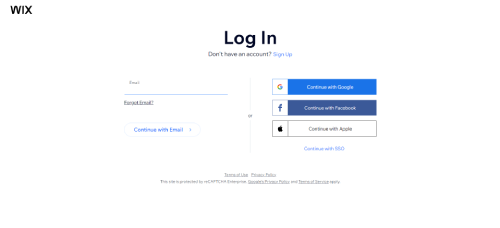
Start by accessing Wix and log into your account. You'll need to create an account if you're new to Wix. Sign up using your email address or by connecting a social media account such as Google or Facebook.
Step 2: Add the Wix Reviews App
Go to the Wix App Market, accessible directly from your site's dashboard. Search for "Wix Reviews", the native first-party app by Wix, and select it from the results.

Step 3: Install the App
Click "Add to Site." The app shows its terms and conditions page. Click "Agree & Add" and the app automatically integrates with your site, no manual code installation needed.

After installation, select the site you wish to integrate the app into. If you manage multiple Wix sites, choose the correct one from the dropdown before proceeding.

Step 4: Configure the App Settings
This is the most important step for your wix reviews app setup. Open the app's configuration panel and adjust these specific settings:

- Display format: Choose between a grid layout (best for product pages with many reviews) or a list layout (better for service businesses). Grid layouts increase review visibility by approximately 30% compared to collapsed list views.
- Star rating display: Enable the aggregate star rating summary at the top of your review widget. This is what feeds rich snippet data to Google, leave it on.
- Review moderation: Toggle "Require approval before publishing" to ON if you want to review each submission first. Toggle it OFF for automatic publishing, which produces faster content freshness signals for SEO.
- Anonymous reviews: Enable or disable under "Reviewer identity settings." Allowing anonymous reviews increases submission volume by removing friction, but disabling it increases perceived review authenticity.
- Notification emails: Enter your email address under "New review notifications" so you are alerted instantly when a customer leaves a wix customer review.
- Review sorting: Set default sort order to "Most recent" for new sites (shows activity) or "Most helpful" for established stores with 50+ reviews.
Step 5: Set Up Review Collection
Decide how you want to collect reviews from your customers. The two options are automatic post-purchase prompts (triggered by Wix Stores order completion) or manual invitation emails sent from your dashboard. Enable automatic prompts first, they run without ongoing effort and consistently outperform manual campaigns in response rate.
For detailed automation workflows, see our guide on how to use Wix automations effectively to chain review requests with follow-up reminders.
Step 6: Customize Your Review Request Emails
Use the app's email editor to customize the review request message sent to customers after purchase. Adjust these three elements for the best results:

- Send timing: Set the delay to 5-7 days after order delivery, long enough for the customer to use the product but short enough that the purchase is still memorable. Emails sent within this window achieve 3-5x higher open rates than same-day requests.
- Subject line: Use the customer's first name and the specific product name. Example: "How did your {product name} work out, {first name}?" personalises the message and increases open rates by up to 26%.
- Body copy: Keep it under 80 words. State the purpose immediately, include a single prominent "Leave a Review" button, and avoid offering incentives in the email itself (this violates Wix Terms of Service and Google's review guidelines).
Step 7: Publish Your Changes
Once all settings are configured and you're satisfied with the setup, click "Publish" in the Wix editor. This applies all modifications to your live site. Your wix reviews widget goes live immediately and customers can begin leaving reviews from that point.
Wix Reviews vs Wix Stores Reviews vs Third-Party Apps: Feature Comparison
Wix users are often confused by the fact that there are three different ways to collect reviews on a Wix site. The choice you make affects what features you get, how reviews appear in Google, and what you pay each month. Here is a side-by-side breakdown so you can pick the right option on the first try.
- Wix Reviews (standalone app): The general-purpose review app for any Wix site, including service businesses, blogs, and portfolios. Free, supports star ratings, text reviews, moderation, and outputs Review schema. Does not pull from Wix Stores order data, review requests are sent manually or via Wix Automations.
- Wix Stores built-in reviews: Activated automatically when you add Wix Stores to your site. Tied directly to product orders, so review request emails fire automatically post-purchase with the correct product attached. Best for product-only catalogues. Cannot be used on non-product pages.
- Fera.ai: Third-party. Photo and video reviews, loyalty-point incentives, Google Shopping review feed integration, customisable widgets for any page. From $9/month after the free tier.
- Judge.me: Third-party. Strong photo-review support, review carousels, Q&A widgets, and import from Shopify or Etsy. Free up to 50 review requests per month, $15/month for unlimited.
- Yotpo: Third-party, enterprise-tier. Visual UGC, SMS review requests, AI sentiment analysis. Pricing on request, only worth considering at high revenue volumes.
Quick decision rule: use Wix Stores reviews if you sell products through Wix Stores; use the standalone Wix Reviews app if you run a service business, blog, or portfolio; upgrade to Fera or Judge.me only when you need photo reviews, multi-platform syndication, or loyalty incentives. Most stores never need to graduate beyond the native option.
The Schema Markup That Triggers Star Ratings in Google
Wix Reviews outputs Review and AggregateRating schema automatically, so you do not need to write any code. But understanding what the schema looks like helps you debug missing star ratings and explain to anyone auditing your site why the markup is correct. Here is the JSON-LD pattern Wix injects on a product page with reviews:
{
  "@context": "https://schema.org",
  "@type": "Product",
  "name": "Example Product",
  "aggregateRating": {
    "@type": "AggregateRating",
    "ratingValue": "4.7",
    "reviewCount": "83"
  },
  "review": [{
    "@type": "Review",
    "author": "Jane D.",
    "datePublished": "2026-03-12",
    "reviewBody": "Great quality, shipped fast.",
    "reviewRating": {
      "@type": "Rating",
      "ratingValue": "5",
      "bestRating": "5"
    }
  }]
}
Three things must be true for Google to display the stars in search results: the product page must use Wix Stores or have a Product schema attached, the review widget with the aggregate rating block must be visible on the same page, and the page must have at least five published reviews. If any of those is missing, the schema is technically valid but Google will not render the rich result.
To audit your own pages, paste the URL into Google's Rich Results Test. The tool reports whether Review and AggregateRating are detected and shows a preview of how the result will appear. Re-test any page after adding new reviews, schema is regenerated dynamically, so a page that did not qualify a week ago may qualify now.
How To Import Reviews From Google and Facebook Into Wix
If you already have reviews on Google Business Profile or your Facebook Page, you do not have to start over from zero on your Wix site. There are three reliable ways to bring those reviews across, and each has different trade-offs around authenticity and SEO value.
- Embed via a third-party widget (recommended): Apps like Elfsight Google Reviews or EmbedSocial pull your live Google or Facebook reviews and display them on your Wix site through an iframe or HTML embed. Reviews stay on the source platform and update automatically. The downside: the review text lives inside an iframe, so Google does not credit your Wix page with that content for ranking purposes.
- Manually re-create them as testimonials: Copy the text of your top 10-15 Google reviews into your Wix Reviews app or testimonials section, with the customer's first name and the original review date noted. This gets the text indexed on your domain and contributes to ranking, but Google's review guidelines require you not to misrepresent these as native Wix Reviews submissions, label the section "From our Google reviews" to stay compliant.
- Use a syndication service: Tools like Trustpilot or Reviews.io let you collect reviews on a single platform and syndicate them to Wix, Google Shopping, and your social profiles in one go. Best for stores already running paid review collection.
For most small Wix stores, a hybrid approach works best: embed the live Google review widget for visual social proof, and re-publish your three or four strongest reviews as text testimonials on key landing pages so the content gets indexed.
Display Options: Star Ratings, Photo Reviews, Text-Only, and Q&A
The default Wix Reviews widget shows aggregate stars plus full-text reviews, but you have more control than most site owners realise. Each display style sends a different signal to visitors, and the right mix depends on what you sell.
- Aggregate star rating only: Just "4.7 stars (83 reviews)" with no individual review text. Best as a small badge in the header, hero, or near the buy button. Highest visual impact at the lowest visual cost.
- Star rating plus snippet: Each review shows the star count, a one-line summary, and a "Read more" expand. Compresses long-form text and lets visitors scan quickly. Strong for product pages with 30+ reviews where full text would push key info below the fold.
- Full text reviews: Default Wix Reviews layout. Highest content density, also the most indexable text on the page, which is the main SEO benefit. Use on the dedicated reviews tab and the bottom of the product page.
- Photo and video reviews: Not native to Wix Reviews, requires Fera, Judge.me, or Yotpo. Photo reviews can lift product-page conversion by 35% according to Yotpo's 2024 ecommerce benchmark. Worth the upgrade if you sell apparel, home goods, or anything where appearance varies from the catalogue photo.
- Q&A widget: Shows customer questions with merchant or community answers. Different from reviews but stacks well next to them. Reduces pre-purchase support tickets and adds long-tail keyword content to product pages.
A Moderation Policy That Protects Your Brand Without Hiding Honest Feedback
If you turn moderation on, the question becomes: which reviews do you publish and which do you reject? A clear written policy keeps you consistent and protects you from accusations of cherry-picking. Here is a workable framework you can adopt as-is.
- Always publish: Any review from a verified customer that describes their actual experience, regardless of star rating. A 1-star review with a clear reason is more valuable than a generic 5-star review, it raises perceived credibility for every other review on the page.
- Always reject: Reviews containing personal attacks, profanity, racist or discriminatory language, competitor promotion, off-topic content, fake details, or anything you can prove was not written by a real customer.
- Reach out before publishing: Reviews where the customer's complaint suggests a fixable issue (wrong item shipped, missing accessory). Email the customer, fix the problem, then ask if they would like to update their review. Most will.
- Never edit a customer's words: Approval is binary. You either publish a review as written or you reject the whole thing and explain why to the reviewer. Editing reviews to soften criticism breaches Wix's terms and is detectable by anyone who saw the original.
Document this policy on a public-facing page (e.g., /reviews-policy) and link it from your reviews section. Visible policies signal good faith and pre-empt complaints from customers whose reviews were rejected.
How To Respond to Negative Reviews Without Making Things Worse
The way you respond to a one or two-star review matters more than the review itself. Future customers read these exchanges to judge how you handle problems. Five common scenarios and the right response pattern for each:
- The shipping complaint: "Sorry your order arrived later than promised. Carrier delays have been worse than usual this season but that is not your problem to absorb. We have credited your account $X, check your email." Acknowledge, do not blame the carrier publicly, fix it materially.
- The product-quality complaint: "Thank you for flagging this, the issue you described is not how this product should perform. Please reply to the email I just sent you so we can replace it at no cost." Move to private channel, follow through, then ask if they would like to update.
- The misunderstanding: Customer expected a feature the product does not have. "Sorry the {product name} did not match what you were expecting. To clarify for anyone reading: this model includes {the features it actually has} and does not include {the feature they wanted}. We have refunded your order in full." Correct the record without making the customer look foolish.
- The unfair review: Vague, no detail, possibly from a non-customer. Reply once, briefly: "We do not have a record of an order matching this name or email, please contact us directly so we can look into it." Do not argue. Do not demand removal in public.
- The fake or competitor review: Report through the Wix Reviews moderation panel with evidence. Do not respond publicly until the report is resolved. If left up, reply factually: "We have no record of this order in our system."
Two universal rules across all five: respond within 48 hours, and keep responses to under 60 words. Long defensive replies look worse than the original review.
Email Automation: A Three-Touch Sequence That Maximises Reviews Without Annoying Customers
Most Wix store owners send a single review request email, get a 3-5% response rate, and conclude that customers do not leave reviews. The truth is that a well-timed three-touch sequence can pull response rates above 15% without measurable unsubscribe damage. Here is the sequence to build with Wix Automations:
- Touch 1, Day 5-7 after delivery: Friendly check-in. Subject: "How is your {product name}, {first name}?" Body: brief, single CTA button. No mention of the word "review" yet, frame it as feedback. Conversion: ~6-8% click through.
- Touch 2, Day 12 after delivery (if no review): Direct ask. Subject: "Quick favour, would you review your {product name}?" Body: explain that small businesses depend on reviews, include the review link, mention it takes under 60 seconds. Conversion: ~5-6% additional.
- Touch 3, Day 20 after delivery (only if no open or no click on Touch 2): Last attempt. Subject: "Last one, promise." Body: 30 words maximum, single link. Conversion: ~2-3% additional. Anyone who did not engage by now is unlikely ever to.
Stop the sequence the moment a review is submitted, Wix Automations supports this with a "review submitted" trigger that cancels remaining steps. Never send more than three touches per order and never offer monetary incentives in the email body, both of which violate Wix Terms of Service and Google's review policy.
Using Wix Reviews With Wix Bookings: A Guide for Service Businesses
Most guides on setting up Wix Reviews assume you run an online store with product pages. If you use Wix Bookings for a salon, fitness studio, consulting practice, tutoring service, or restaurant, the standard product-page workflow does not apply. Your "products" are sessions, appointments, and classes, and the review setup works differently.
Here is what changes when you run a service business on Wix:
- Wix Reviews connects to services, not products: When you have Wix Bookings active, the Wix Reviews app can attach reviews to your individual service pages (e.g., "60-min Deep Tissue Massage" or "Beginner Yoga Class"). In the app settings, set the content type to "Services" rather than "Products." Each service gets its own star rating and review feed.
- Automatic post-booking review requests: Wix Automations has a "booking completed" trigger that fires after an appointment is marked as attended. Connect this trigger to a review request email in the same way product stores connect "order fulfilled." Set the delay to 24-48 hours after the appointment, not the 5-7 day window used for physical products. The experience is still fresh at 24 hours; waiting longer causes drop-off for service businesses.
- Schema type difference: Wix outputs LocalBusiness schema (not Product schema) for service pages in most configurations. This means your rich snippets appear as star ratings in local search results and Google Maps listings, not in standard product carousels. If you rely on local customers finding you through Google Search, this is actually more valuable than product-page stars.
- Handling appointment-specific complaints: Service reviews often name individual staff members. Decide your policy upfront: do you display staff names in the review widget, or keep it business-level? Staff-named reviews are more credible but require a clear policy on how to handle negative reviews that name a specific employee. Respond at the business level, never let individual staff reply to reviews through the same account.
- Review collection after group sessions: For yoga classes, workshops, or group coaching, Wix Automations can send a single review request to all attendees of a session using the booking list. This batch approach generates significantly more reviews per session than one-at-a-time follow-ups. Set up the trigger to fire once per session, not once per individual booking.
- Restaurants and hospitality: Wix Bookings handles table reservations, but reviews for restaurants sit more naturally on Google Business Profile than on a Wix service page. The best approach for restaurants is to embed Google Reviews on the Wix site (as described in the import section above) rather than trying to route diners through a Wix-native review request flow. Most diners leave reviews on Google automatically; the native Wix Reviews app adds little for this specific use case.
For service businesses, the biggest benefit of a working review setup is local SEO, not ecommerce conversion. A salon with 40+ reviews and a 4.6-star average on its Wix Bookings service pages has a strong signal for Google's local ranking algorithm, even if those reviews never appear as product rich snippets in organic search.
Where Should You Place Your Wix Review Widget?
Place your Wix review widget directly on individual product pages, below the product description and above related products. This position captures buyer intent at its highest point, shoppers reading product details are already evaluating a purchase decision, so reviews placed here convert better than reviews on a dedicated reviews page.
Use these placement rules for maximum impact:
- Product pages: Display the aggregate star rating (e.g., "4.7 stars, 83 reviews") directly below the product title, above the price. This is the primary trust signal for first-time visitors. Place the full review widget below the product description.
- Homepage: Add a curated "Featured Reviews" section showing 3-5 hand-picked reviews with star ratings. Wix lets you select specific reviews to display in a widget, choose reviews that mention specific benefits rather than generic praise.
- Checkout page: If your Wix plan allows custom checkout sections, a small "Trusted by X customers" badge with a star average near the checkout button reduces cart abandonment. This social proof works at the final decision point.
- Avoid footers and sidebars: Review widgets in sidebars and footers see significantly lower engagement. Inline placement within the content flow always outperforms peripheral placement.
For broader advice on building trust signals across your Wix site, see our guide on how to add customer testimonials to Wix, reviews and testimonials work best when used together.
Does Wix Reviews Support Rich Snippets (Star Ratings in Search Results)?
Yes, Wix Reviews automatically outputs the structured data (schema markup) that allows Google to display star ratings directly in search results. These rich snippets appear as yellow stars beneath your page title in Google Search and can increase click-through rates by 10-35% compared to standard blue-link results.
To make sure rich snippets activate correctly:
- Enable the star rating summary widget on your product pages (set in Step 4 above). Google reads the aggregate rating from this widget's schema output.
- Collect at least 5 reviews on a product before Google reliably shows star ratings. Pages with fewer than 5 reviews may not trigger the rich result.
- Use Wix's built-in SEO settings to make sure your product pages have proper meta titles and descriptions, rich snippets appear alongside these fields. See our guide on how to add meta tags on Wix for the full setup.
- Validate your schema using Google's Rich Results Test (search.google.com/test/rich-results) after publishing. Paste your product page URL to confirm the Review schema is detected correctly.
Note: Rich snippets are controlled by Google, Wix outputs the correct schema, but Google decides whether to display stars in search results based on its own quality signals. Consistently collecting genuine reviews is the fastest path to triggering and maintaining star ratings.
The Conversion Impact of Reviews: What the Numbers Actually Show
Reviews are not just a trust gesture, they produce measurable revenue lift. Here are the specific numbers from public ecommerce studies, so you know what to expect when you add reviews to a Wix site that does not currently have them.
- Conversion lift from any reviews vs none: Product pages with at least one review convert 270% higher than identical pages without any reviews (Spiegel Research Center, Northwestern University). The biggest jump is between zero and one review, the marginal value of each additional review is smaller after that.
- Optimal review count: Conversion gains plateau at around 50 reviews per product. Above that, you are mainly defending against negative reviews dragging down your average. Focus collection effort on products with under 20 reviews first.
- Star rating sweet spot: Counterintuitively, products rated between 4.2 and 4.7 stars convert better than perfect 5.0-star products. Buyers distrust ratings that look too good. Do not feel pressure to publish only glowing reviews.
- Photo reviews: Add an additional 35% conversion lift on top of text reviews (Yotpo benchmarks, 2024). Single biggest reason to consider Fera or Judge.me over the native app.
- CTR lift from star rich snippets: 10-35% additional click-through from Google search results when stars display. Compounds with the on-site conversion lift.
Combined, a Wix store that goes from no reviews to a steady review collection process and visible star rich snippets can realistically expect 2-4x more revenue from organic search traffic on the same number of visitors.
Wix Reviews vs Third-Party Apps: When to Upgrade
Wix Reviews works well for most small-to-medium ecommerce businesses. But there are specific situations where a third-party review app makes more practical sense. Here's the honest breakdown:
When Wix Reviews Is the Right Choice
- You're starting out or have low order volume: the native app is free, installs in one click, and handles the basics well. There's no reason to pay for a third-party app until you hit a specific limitation.
- You only sell on Wix: Wix Reviews integrates directly with your Wix Stores order flow. Review requests fire automatically after purchase without any configuration.
- You need schema markup for rich snippets: Wix Reviews outputs Review schema automatically. No setup needed for star ratings to appear in search results.
When You Need a Third-Party App
- You need photo or video reviews: Wix Reviews only supports text and star ratings. Third-party apps like Loox and Fera.ai support photo submissions from reviewers, which significantly boosts conversion for fashion, beauty, and home goods categories where seeing the product in use matters. Loox and Fera.ai both have Wix App Market listings.
- You sell across multiple platforms: Wix Reviews is site-specific. It doesn't help you manage your Google reviews, Etsy profile, or Facebook reviews in one place. If you need cross-channel review management, Yotpo or Trustpilot handle this.
- You need review syndication to Google Shopping: if you want your reviews to appear in Google Shopping product listings, Wix Reviews doesn't support this natively. Yotpo and Bazaarvoice are built for brands that need review content syndicated across shopping feeds and retail partner sites.
- You're migrating from Shopify or Etsy and have existing reviews: Judge.me supports importing reviews from other platforms. Wix Reviews has no import function. If you've built up years of reviews elsewhere, Judge.me (free plan available) lets you carry them over.
- You're processing more than 30-50 reviews per week: the native Wix moderation interface can become a bottleneck at high volume. Third-party platforms have bulk moderation, automated spam detection, and flagging workflows that Wix Reviews lacks.
Quick Comparison: Native vs Third-Party
| Feature | Wix Reviews | Fera.ai | Judge.me | Loox |
| Cost | Free | From $9/mo | Free / $15/mo | From $9/mo |
| Photo reviews | No | Yes | Yes | Yes |
| Google Shopping syndication | No | Yes | No | No |
| Review import from other platforms | No | No | Yes | No |
| Schema markup for rich snippets | Yes (automatic) | Yes | Yes | Yes |
| Automated review request emails | Yes | Yes | Yes | Yes |
| Loyalty points for reviews | No | Yes | No | No |
For most Wix stores, the native Reviews app is the right starting point. Upgrade to a third-party app when you hit a specific limitation: visual reviews, multi-platform management, review syndication, or import needs. For more on Wix ecommerce capabilities, see our Wix eCommerce review.
Tips for Managing Wix Product Reviews Effectively
Managing product reviews effectively is important for any business aiming to enhance its online reputation and customer satisfaction. Reviews provide valuable feedback and influence potential customers' purchasing decisions. By actively engaging with and managing these reviews, businesses can build trust and encourage more interactions from their customer base.
Respond to Reviews with Specific Templates
Respond to every review within 48 hours, positive or negative. Fast response signals to Google that your business is active, and it signals to future customers that you are engaged. Use these proven response structures:
- Positive review response: "Thank you, , we're really glad worked well for you. We look forward to having you back." Referencing the specific detail the customer mentioned shows the response is genuine, not templated.
- Negative review response: "Thank you for the feedback, . We're sorry didn't meet expectations, this isn't the experience we want to provide. Please reach out to us at so we can make it right." Always move resolution to a private channel to avoid public back-and-forth.
- Neutral review response: "Thanks for taking the time to review us, . We noted your comments about , that's useful feedback we'll take forward."
Encourage Reviews Through Timed Follow-Up Sequences
Actively encourage your customers to leave reviews by reducing friction. Send your initial review request email 5-7 days after delivery (configured in Step 6 above). If there is no response, send one follow-up reminder 5 days later, a single reminder increases total review volume by 25-40% without significantly increasing unsubscribe rates. Do not send more than two requests per order.
Monitor Reviews Weekly and Track Sentiment Trends
Check your Wix Reviews dashboard every week. Look for recurring complaints in negative reviews, if three or more reviews in a month mention the same issue (e.g., slow delivery, unclear sizing), treat it as a product or process signal, not just an isolated complaint. Document trends and act on them. Review sentiment trends are one of the most direct forms of customer research available to a small business at no cost.
If your customers primarily leave feedback on Google rather than through the native Wix Reviews system, you can also embed Google Reviews on your Wix site to pull that social proof directly onto your pages.
Final Setup Checklist: Wix Reviews
Setting up Wix Reviews is a process that significantly enhances your website by building trust and credibility through customer feedback. Follow the seven steps above, install the wix reviews app, configure display and moderation settings, place the widget in high-impact spots, enable rich snippet schema, and run an automated three-touch email sequence, and you create a wix review system that works for both your customers and search engines.
The native Wix Reviews app handles the essentials at no cost. When you need photo reviews, incentive management, or multi-platform syndication, third-party tools like Fera or Judge.me give you a clear upgrade path. Either way, actively managing reviews, responding within 48 hours, collecting reviews on a consistent schedule, importing existing Google or Facebook reviews where helpful, and acting on negative feedback trends, is what separates sites that benefit from reviews from those that simply display them.
Service businesses using Wix Bookings should configure the "Services" content type in the app settings and connect the "booking completed" automation trigger to a review request sent 24-48 hours post-appointment. The setup takes the same 15 minutes but produces local SEO value rather than ecommerce rich snippets. See our guide on Wix Bookings for the full booking workflow.
* read the rest of the post and open up an offer